
Michael Kim of Cendana Capital is often a first call for emerging seed-stage fund managers. Cendana has invested in many VC teams that have gone to enjoy great success – like Forerunner Ventures, K9 Ventures, and IA Ventures. Thanks to its own backers, Cendana keeps replenishing its supply of investing capital, too. Indeed, Kim tells […]
Read more Set your coordinates for the Space Stage on September 19, Day 1 promptly at 0800 hours of TechCrunch Disrupt 2023. You’ll find sessions featuring some of the industry’s leading founders, investors, NASA researchers, Department of Defense officials, military commanders and national security experts. Launch into the future of space at TechCrunch Disrupt 2023 These leaders […]
Read more The summer of 2023 is almost over and still we don’t have a Cybertruck. But thanks to an apparent serendipitous visit to a regular ol’ parking lot in San Francisco, there are some fresh images of the unreleased, polygonal electric truck. New photos of Elon Musk’s Cybertruck, shared by Tesla watchers The Kilowatts, offer an updated […]
Read more X, formerly known as Twitter, has filed a lawsuit alleging that a new California law requiring social networks to declare certain moderation practices is a violation of the company’s Constitutional right to free speech. AB 587 was signed into law a year ago. At the time, California Governor Gavin Newsom wrote: “Californians deserve to know […]
Read more A series of unfortunate and cascading mistakes allowed a China-backed hacking group to steal one of the keys to Microsoft’s email kingdom that granted near unfettered access to U.S. government inboxes. Microsoft explained in a long-awaited blog post this week how the hackers pulled off the heist. But while one mystery was solved, several important […]
Read more This is today’s edition of The Download, our weekday newsletter that provides a daily dose of what’s going on in the world of technology.
What to know about this autumn’s covid vaccines
Many people have started testing positive for covid recently. Hospitalizations for the disease in the US rose nearly 16% during the third week of August, and even Jill Biden tested positive this week.
Data suggest we’re at the beginning of a fall wave. It’s been a year since a covid booster was released, and while the latest wave isn’t likely to be as bad as the tsunami we experienced in 2021-2022, there’s a lot of uncertainty about what the next few months look like.
So, where are the updated shots to help protect us? And how do they stack up against the challenging new variants? Read the full story.
—Cassandra Willyard
This story first appeared in The Checkup, MIT Technology Review’s weekly biotech newsletter. Sign up to receive it in your inbox every Thursday.
My colleague Jessica Hamzelou recently wrote about how covid hasn’t gone away. Check it out here.
How should we regulate AI?
Deciding how to regulate AI is one of the biggest challenges facing politicians and experts alike. On September 12 we’re holding the second MIT Technology Review Roundtable: a 30-minute conversation with our writers and editors—and this one’s all about governing AI.
Melissa Heikkilä, our senior reporter for AI, will be chatting with news editor Charlotte Jee about what should be done to keep AI companies in line. Roundtables are free for MIT Technology Review subscribers, so if you’re not already, you can become one today from just $80 a year.
The must-reads
I’ve combed the internet to find you today’s most fun/important/scary/fascinating stories about technology.
1 Elon Musk cut off Starlink internet to disrupt Ukrainian troops
He scuppered a sneak attack Ukraine had planned on Russia’s naval fleet. (CNN)
+ The news underscores the disproportionate power that SpaceX wields. (WP $)
+ Musk’s famously impulsive decisions often come back to bite him. (WSJ $)
+ Starlink signals can be reverse-engineered to work like GPS. (MIT Technology Review)
2 Huawei has unveiled another controversial smartphone
Officials are baffled how China appears to have sidestepped US chip sanctions. (Bloomberg $)
+ The new handset could be seriously bad news for Apple. (WSJ $)
3 US and UK authorities have sanctioned ransomware gang members
The notorious Trickbot group has evaded justice for years. (Wired $)
4 There are no drugs to reliably treat anorexia
Despite close to 50 years of research, researchers have had little success. (The Atlantic $)
5 Another FTX executive has pleaded guilty
Ryan Salame made political contributions to the Republican party under the guise of loans. (CoinDesk)
+ If he’s found guilty, he faces up to 10 years in prison. (NYT $)
6 Microsoft is working on the world’s largest cancer-detecting AI model
The system examines images of tissues and flags anomalies to human doctors. (CNBC)
+ A new blood test could diagnose diseases within 10 minutes. (FT $)
+ Doctors using AI catch breast cancer more often than either does alone. (MIT Technology Review)
7 ChatGPT convinced the Pentagon to invest in AI-powered weapons
That’s according to former VR CEO Palmer Luckey, who now builds military drones. (Motherboard)
+ Inside the messy ethics of making war with machines. (MIT Technology Review)
8 Service staff have had enough of your TikTok gimmicks
They’re unwilling participants in thousands of tedious food skits. (WSJ $)
9 Australia is ditching handwritten signatures
Electronic signatures and video link witnessing will replace the need to sign on the dotted line in person. (The Guardian)
10 You probably don’t need to upgrade your iPhone 
But Apple sure is good at convincing you that you should. (Vox)
Quote of the day
“People are starting to leave a trace. They’re forgetting the core principles of the burn.”
—Jeffrey Longoria, who attended this year’s mud-stricken Burning Man festival, laments how visitors are forgetting to clear up after themselves, Insider reports.
The big story
VR is as good as psychedelics at helping people reach transcendence
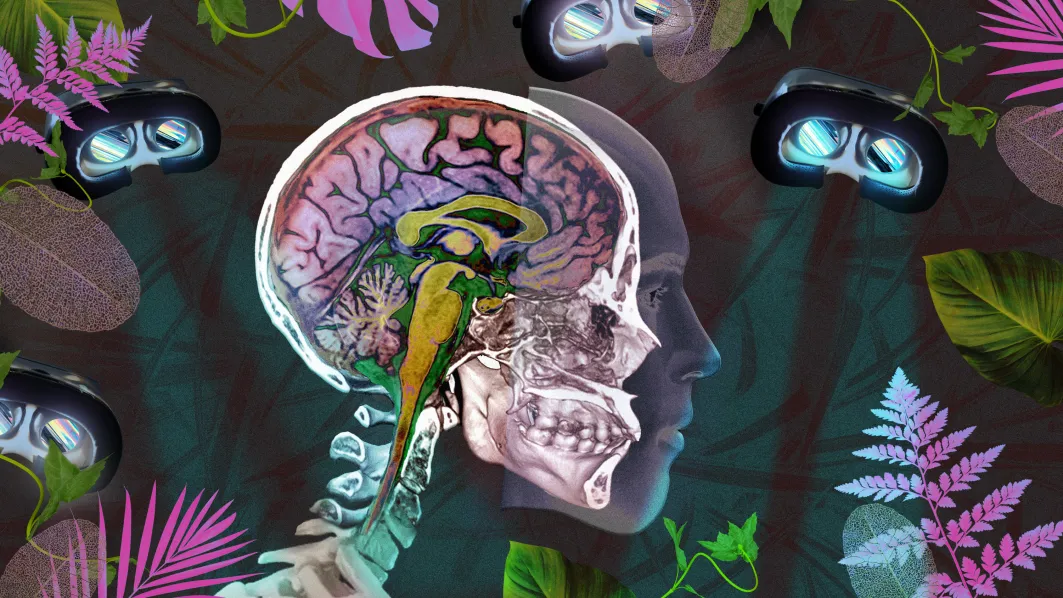
After a near-death experience, artist and physicist David Glowacki tried to recapture the hallucinatory transcendence he felt. A VR experience called Isness-D is his latest effort.
On four key indicators used in studies of psychedelics, the program showed the same effect as a medium dose of LSD or psilocybin (the main psychoactive component of “magic” mushrooms).
That means it could potentially be used to alleviate the symptoms of mental health conditions, including obsessive-compulsive disorder, addiction, post-traumatic stress disorder, and depression. Read the full story.
—Hana Kiros
We can still have nice things
A place for comfort, fun and distraction in these weird times. (Got any ideas? Drop me a line or tweet ’em at me.)
+ These drone shots of marine creatures are pretty cool.
+ If tracking murders in late medieval London, York, or Oxford is your thing, boy, do I have some maps for you.
+ These no-bake peanut butter bars sound like the perfect weekend treat.
+ Ethan Lee is doing the most: by porting our favorite indie PC games to Linux.
+ Alien is full of meticulously-designed semiotic standards. Check them out.
This article first appeared in The Checkup, MIT Technology Review’s weekly biotech newsletter. To receive it in your inbox every Thursday, and read articles like this first, sign up here.
Last week I came down with some kind of bug. So I got to play one of my least favorite games: “Covid or Not Covid?” In my case, two rapid tests were negative, so probably not covid. But many other people have been testing positive. Covid hospitalizations in the US rose nearly 16% during the third week of August. Even Jill Biden got covid this week. Data suggest we’re at the beginning of a fall wave. And with students returning to schools and workers returning to offices, I’m sure I’m not the only one who is thinking about covid vaccines. It’s been a year since a booster was released, and while the latest wave isn’t likely to be as bad as the tsunami we experienced in 2021-2022, there’s a lot of uncertainty about what the next few months look like. So for this week’s Checkup, let’s take stock of where we’re at. Where are the updated shots? And how do they stack up against the new variants?
When will I be able to get my next covid shot?
Depending on where you live, as soon as this month. At the beginning of the summer, the US Food and Drug Administration decided that the vaccine needed a refresh. The agency advised manufacturers to develop vaccines targeting XBB.1.5, a descendent of omicron and one of the dominant variants circulating at the time. Pfizer, Moderna, and Novavax have done that. Now they’re waiting on FDA approval, and guidance from the Centers for Disease Control and Prevention on how the shots should be administered. That should all happen by mid-September. The CDC’s Advisory Committee on Immunization Practices, the body that provides guidance on who should get vaccinated and when, is set to meet next week, on September 12.
In Europe, Pfizer’s new vaccine is already approved. The European Commission greenlighted the shot last week. And this week regulators in the United Kingdom followed suit. The first shots should be going into arms soon. Those at greatest risk of developing serious illness in the UK will be eligible for the new shot starting September 11.
But XBB 1.5 isn’t the only variant circulating these days. How worried should I be about newer ones?
XBB variants are still causing the majority of infections in the US, but a couple of other variants have been gaining ground. According to CDC estimates, EG.5 is now responsible for about 20% of covid-19 cases in the US, more than any other single circulating variant. A variant called FL 1.5.1 comes in second, making up 15% of cases. These viruses don’t seem to cause more severe disease, but they are more adept at evading the body’s immune response.
Scientists are also paying close attention to a variant first detected in early August known as BA.2.86 or, by its nickname, pirola. This variant is notable because it’s so unlike any of the other versions circulating. “What really caught people’s attention is that it had over 30 mutations in spike, so a very substantial genetic change,” says Dan Barouch, an immunologist at Harvard University, referring to the sharply protruding protein the virus uses to gain entry into cells. It’s only the second time that SARS-CoV2 has made such a big leap. (The first time was the jump from delta to omicron, a shift that led to the deadliest covid wave to date.) The worry is that this massive change in sequence might make the virus harder for our immune systems to recognize and fight off.
But preliminary data trickling in suggests that fears about pirola may be overblown. In a preprint posted on Tuesday, Barouch and his colleagues looked at blood samples from 66 individuals, some who received the bivalent booster in the fall and some who didn’t. The group also contained a subset of people who had been infected with XBB.1.5 in the past six months. Neutralizing antibody levels against BA.2.86 were comparable or higher than levels against XBB.1.5, EG.5, and FL.1.5.1. So this variant doesn’t seem to be much more immune evasive than other variants. “That was a bit unexpected, and good news,” Barouch says.
Those results are roughly consistent with what labs in China and Sweden reported in recent days. If you want a fantastic deep dive into all this data, check out this newsletter from Your Local Epidemiologist.
BA.2.86 has been “downgraded from a hurricane to not even a tropical storm,” Eric Topol told USA Today, adding, “We’re lucky. This one could have been really bad.” But the data thus far is preliminary. And even if BA.2.86 is just a light rain shower, that doesn’t mean it won’t lead to problems in the future. “It’s BA.2.86 (Pirola) descendants that worry me more than the current variant per se,” wrote T. Ryan Gregory, an evolutionary biologist at the University of Guelph, on Twitter. “The concern will be that it will continue to evolve and its descendants will have traits that make it successful at reaching new hosts.” In fact, BA.2.86 already has developed a sublineage.
So if BA 2.86 isn’t causing the surge, what is?
Probably a combination of factors, including waning immunity. The last vaccine update, the bivalent shot, came out a year ago. “It’s been quite a long time since boosters were provided for covid, and those boosters did have a relatively low uptake rate in the population,” noted Johns Hopkins virologist Andrew Pekosz in a recent Q&A. Plus, the new dominant variants are more adept at evading our immune system than previous viruses.
How well will the new vaccines work?
That remains to be seen. Both Moderna and Pfizer have reported that the new shots elicit a strong antibody response against the XBB variants, as well as EG.5.1, FL 1.5.1, and BA.2.86.
Borouch and his team also found that XBB.1.5 infection appeared to boost neutralizing antibodies against BA.2.86, a hopeful sign that the vaccine might also help fend off the new variant.
But protection will likely fade quickly, just as it did with previous covid vaccines. “We know that the durability of the mRNA boosters is relatively limited,” Barouch says—on the order of six months.
An updated shot will be most important for people who are immunocompromised or vulnerable in other ways that leave them at high risk for developing severe disease. Whether the shot will be useful for younger, healthier people “is a source of some controversy amongst experts in the field,” Barouch says.
We know the vaccine won’t protect against any and all covid infections. But it could lessen the severity of the illness. “I still might get [covid], but it just might not be as uncomfortable,” says John Wherry, an immunologist at the University of Pennsylvania. An updated shot might also reduce the risk of developing long covid. “There’s still some chance of getting long Covid every single time you get infected,” Wherry says. But if a robust immune response can keep the virus from spreading beyond the upper respiratory tract, “I think the chances of long covid are probably a little bit lower.”
That’s a win in Wherry’s book: “I’ll take it.”
Read more from Tech Review’s archive
mRNA vaccines came into their own during the covid-19 pandemic, but they can be leveraged for so many other purposes. That includes fighting diseases like malaria and Zika and cancer, wrote Jessica Hamzelou earlier this year. And, as Antonio Regalado reported in 2021, they could also help make gene therapies simpler and cheaper.
Last year, we introduced you to the scientists tracking the evolution of SARS-CoV-2 and predicting where it might be headed. Linda Nordling has the story.
Many companies are working on covid vaccines that you inhale. The hope is that they might provide better protection against infection. Last year, after the first two inhaled vaccines were approved, Jessica Hamelzou provided an explainer.
Could we develop a vaccine against all coronaviruses? (Fingers crossed.) Last year, Adam Piore took a look at some promising developments.
From around the web:
Last week I wrote about the controversy over new therapies for dwarfism. These medicines help kids grow taller faster, but for many little people, short stature is not a problem in need of a fix. (Nature)
Why does electroconvulsive therapy work? Researchers have shockingly little intel. “‘When I shut down this computer and I reboot it, I turn it back on and it works,’ said Michael Alan Taylor, a retired neuropsychiatrist who studied ECT for years. ‘I know as much about the mechanism of that as I do about ECT. Which is zero.’” (Undark)
Scientists are making headway in the quest to turn stem cells into human embryos. Researchers in Israel have created the most sophisticated and complete version yet, an advance that could lead to better fertility treatments, drug testing, and transplants. (Guardian)
Could clots explain the brain fog that often comes with long covid? (Scientific American)
TikTok’s giving more creators the chance to make money from their clips.
The challenges keep coming for the X team.
TikTok’s determined to get users shopping in the app.