
Companies often attempt to raise from VCs despite knowing they can’t possibly deliver venture-scale returns.
Read more This is today’s edition of The Download, our weekday newsletter that provides a daily dose of what’s going on in the world of technology.
DeepMind’s cofounder: Generative AI is just a phase. What’s next is interactive AI.
DeepMind cofounder Mustafa Suleyman wants to build a chatbot that does a whole lot more than chat. In a recent conversation he had with our senior AI editor Will Douglas Heaven, he explained his view that generative AI is just a phase.
What’s next, he says, is interactive AI: bots that can carry out tasks you set for them by calling on other software and people to get stuff done. He also calls for robust regulation—and doesn’t think that’ll be hard to achieve.
While many will scoff at Suleyman’s brand of techno-optimism—even naïveté—he is not the only one talking up a future filled with ever more autonomous software. And, unlike most people, he has a new billion-dollar company, Inflection, with a roster of top-tier talent. It may just put him in a position to change the world in the ways he’s always wanted to. Read the full story.
How new tech is helping people circumvent digital authoritarianism
Questions about who gets to control the internet and who gets access to online information are central to the future of our world. They have ramifications for geopolitics, free speech, national security, political organizing, human rights, equity, and power distribution in general.
We’re in the midst of a quiet technological arms race between the censors and those trying to evade them. And as people grow more dependent on digital tools and platforms, the harm done by online censorship becomes more serious. Read the full story.
—Tate Ryan-Mosley
This story is from The Technocrat, Tate’s weekly newsletter giving you the inside track on all things power and policy in Silicon Valley. Sign up to receive it in your inbox every Friday.
This startup plans to power a tugboat with ammonia later this year
Transportation is one of the world’s most polluting industries, accounting for roughly 15% of global greenhouse-gas emissions. Electric vehicles will make a dent in those emissions in the coming decades, but batteries can’t hold enough energy to power vehicles like long-range trucks and transoceanic ships.
Young Suk Jo, 34, came up with a possible solution in an unlikely chemical: ammonia. Amogy, a startup Jo cofounded in 2020, is building systems that can use ammonia, typically a component of fertilizer, as a fuel to power trucks and ships.
While Amogy has successfully demonstrated its technology in a small drone and a truck, Jo has now set his tights on a slightly more ambitious form of transportation: a tugboat. Read the full story.
—Casey Crownhart
Young Suk Jo is one of MIT Technology Review’s 35 Innovators Under 35 for 2023. Read the full list of this year’s honorees, including those making a difference in robotics, computing, biotech, climate and energy, and AI.
The must-reads
I’ve combed the internet to find you today’s most fun/important/scary/fascinating stories about technology.
1 Chipmaker Arm isn’t reaping the benefits of the AI boom yet
But it has managed to side-step the US-China chip war. (WSJ $)
+ The US is keen to source chips from Vietnam. (Rest of World)
+ The chip patterning machines that will shape computing’s next act. (MIT Technology Review)
2 A cultivated meat startup concealed how its ‘meat’ was really produced
Upside Foods’ chicken filets were not brewed in a bioreactor, as it claimed. (Wired $)
+ Two companies can now sell lab-grown chicken in the US. (MIT Technology Review)
3 Abortion care providers have created a trustworthy chatbot
The Charley bot is designed to provide up-to-date, reliable information on clinics. (WP $)
+ Texas is trying out new tactics to restrict access to abortion pills online. (MIT Technology Review)
4 Reducing air pollution could unintentionally speed up global warming
But ultimately, cleaner air makes for a healthier planet—and human inhabitants. (Vox)
+ A startup says it’s begun releasing particles into the atmosphere, in an effort to tweak the climate. (MIT Technology Review)
5 Apple is facing tough times in China
While it avoided outright bans imposed on other US tech giants, its days could be numbered. (FT $)
6 The days of the digital town square are over
Social media feels a lot more fragmented as a result. (NY Mag $)
7 What it’s like to attend an internet addiction support group
Even though it’s not officially recognized as an addiction by medical standards bodies. (The Guardian)
+ How to log off. (MIT Technology Review)
8 How Spotify transformed music
Shorter songs, and mega-collaborations are some of its calling cards. (WSJ $)
9 The perfect time to buy concert tickets? It depends on the artist
Resale prices can fluctuate wildly, depending on when you’re browsing. (Bloomberg $)
10 The James Webb Space Telescope has captured a newborn star 
The spectacular image depicts powerful winds emanating from the young star. (New Scientist $)
+ The US military is shooting satellites into space super quickly. (Ars Technica)
+ How the James Webb Space Telescope broke the universe. (MIT Technology Review)
Quote of the day
“Time to try a new hobby.”
—A user reacts to AI image-generator Mage Space’s decision to restrict its users from generating sexual images of celebrities, 404 Media reports.
The big story
Cops built a shadowy surveillance machine in Minnesota after George Floyd’s murder
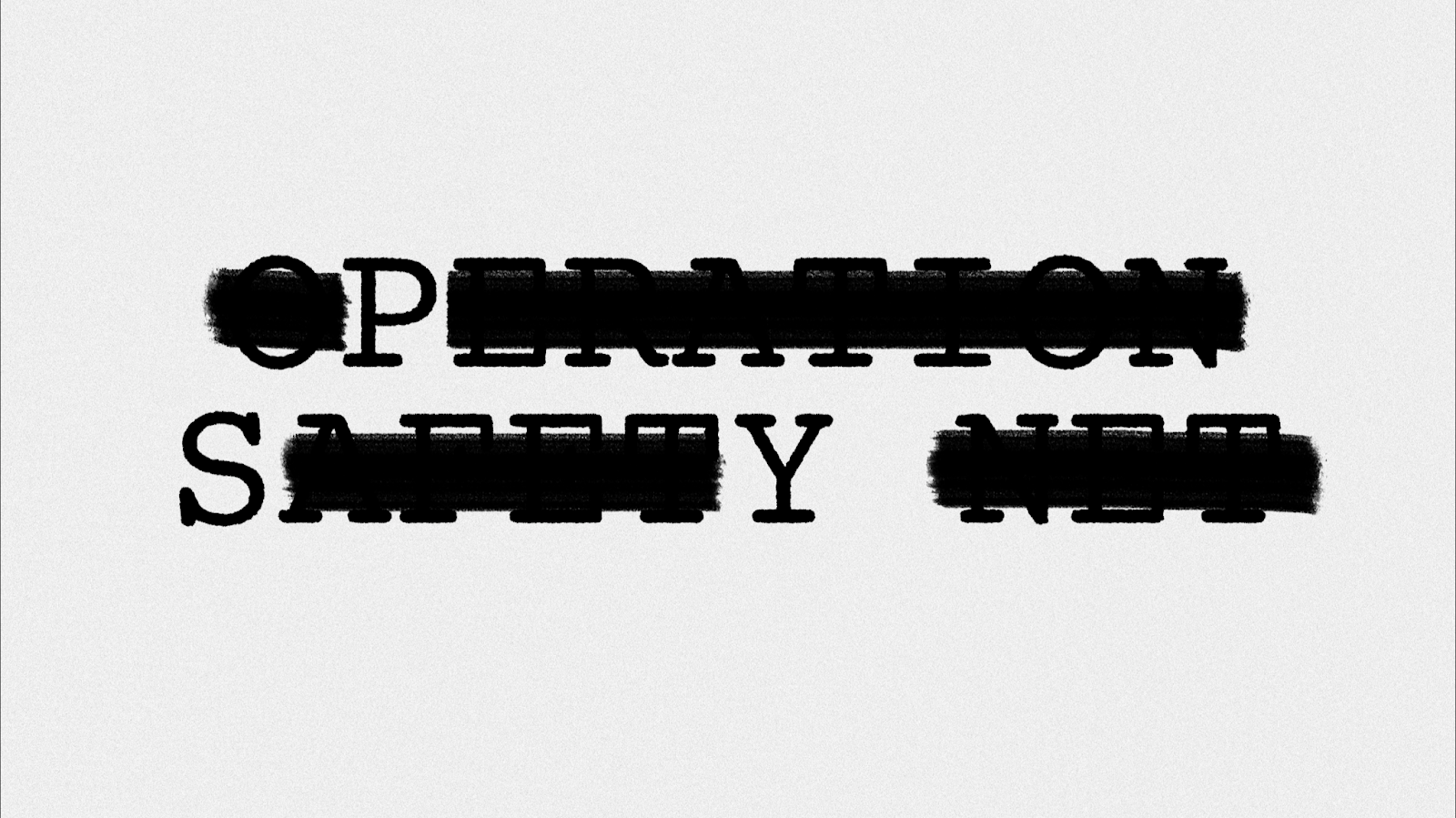
Law enforcement agencies in Minnesota have been carrying out a secretive, long-running surveillance program targeting civil rights activists and journalists in the aftermath of the murder of George Floyd in May 2020.
Run under a consortium known as Operation Safety Net, the program was set up in spring 2021, ostensibly to maintain public order as Minneapolis police officer Derek Chauvin went on trial for Floyd’s murder.
But an investigation by MIT Technology Review reveals that the initiative expanded far beyond its publicly announced scope to include expansive use of tools to scour social media, track cell phones, and amass detailed images of people’s faces. Read the full story.
—Tate Ryan-Mosley & Sam Richards
We can still have nice things
A place for comfort, fun and distraction in these weird times. (Got any ideas? Drop me a line or tweet ’em at me.)
+ These oceanic pictures are really something (thanks Mike!)
+ A plastic Ikea bag is an unorthodox storage method for a Van Gogh painting, I’ll give you that.
+ An Early Middle English version of Running Up That Hill? Sure, why not.
+ Now we’re nearing fall, this glass squash is the perfect harbinger of the new season.
+ Gen Z has discovered nu metal and is interpreting it in their own unique way.
This article is from The Technocrat, MIT Technology Review’s weekly tech policy newsletter about power, politics, and Silicon Valley. To receive it in your inbox every Friday, sign up here.
I want to talk about the battle that’s raging every day between people who want to censor online content and those who want to protect access to a free and open internet.
It also relates to a recent scoop about a new Google product that’s designed to make it easier for developers to build censorship-resistant apps. I’ve said it before and I’ll say it again: this is a space worth paying attention to.
Questions about who gets to control the internet and who gets access to online information are central to the future of our world. They have ramifications for geopolitics, free speech, national security, political organizing, human rights, equity, and power distribution in general. And I promise, it’s not as niche, or as simplistic, as you may think.
We’re in the midst of a quiet technological arms race between the censors and those trying to evade them. Lots of people are already aware of China’s Great Firewall and the digital ice age in North Korea, but over the past two years, we’ve seen interesting developments in censorship in Russia, especially related to the war on Ukraine, and in Iran, during the latest wave of pro-democracy protests last fall.
To make matters worse, authoritarian regimes are increasingly learning from each other. They can share and copy each others’ censorship tactics more quickly than ever before. As a result, internet censorship is now being wielded as a political weapon in countries all over the world, even including democracies. And as people grow more dependent on digital tools and platforms, the harm done by online censorship becomes more serious.
Developers of technologies that can help to circumvent censorship, like VPNs, traffic disguisers, and anonymity and encryption tools, are constantly trying to keep up with changes in tactics. During times of internet crackdowns, censors and circumventors get into a “cat-and-mouse” game, where censors move to block access in a particular way, and circumventors work on finding technical solutions to by-pass the blocking. The game continues and often escalates.
But Roya Ensafi, a professor of computer science at the University of Michigan, says the majority of censorship fighters “lack the necessary technical means to develop and deploy circumvention capabilities” that can withstand the evolving tactics and sophisticated surveillance of governments like Russia, China, and Iran.
The circumvention tools that do exist can be expensive to run, and they often require a level of technical expertise that most internet users lack. The new product created by Google’s Jigsaw, a team within the larger company that does more socially oriented work, is intended to make this all easier. Jigsaw created an SDK version of its Outline VPN product, which will allow developers to build censorship resistance directly into their apps.
More progress is being made every day to make the web more censorship resistant, largely thanks to networks of activists and volunteers who are committed to internet freedom, often in secret and at great personal risk.
But there is much more work to be done, Ensafi says: the fight against censorship “requires multidisciplinary collaborations between journalists, NGOs, researchers, engineers, and, most importantly, users in censored regions.”
What else I am reading
- It seems that Elon Musk is finally in position to fight for the “free speech” platform that he has long wanted Twitter, now X, to be. Musk is suing California over a new law intended to increase transparency into social media’s content moderation processes, on the grounds that the law violates First Amendment speech protections. It’s surely no coincidence that this law would burden X with more content moderation costs.
- I was captivated by this inside-access story from Kashmir Hill about how leading tech companies decided not to release facial recognition technology when they first developed it. It is a fascinating and dramatic tale that shows just how much power over society these companies have.
- This week, Google headed into its biggest antitrust case in recent years. It’s fighting against a case brought by the US Justice Department, which claims that Google illegally orchestrated its business dealings to make sure its search engine was the default on phones and web browsers. NPR wrote a great explainer that lays out what you need to know.
What I learned this week
A report from Tech Policy Press, published on September 12, adds to the growing pile of evidence that online harassment can cause real-world violence. It’s written by Itxaso Domínguez de Olazábal, an officer at 7amleh—the Arab Center for the Advancement of Social Media, a nonprofit organization that advocates for Palestinian digital rights, which put out a report on the topic back in June.
Researchers at 7amleh looked at tweets relating to one Palestinian village, Huwara, that has been a center for conflict between Israeli settlers and Palestinian villagers. Using a sentiment analysis algorithm, they analyzed over 15,000 Hebrew-language tweets with the hashtags “Huwara (#חווארה)” and “Wipe out Huwara (#חווארה_את_למחוק)” from the beginning of the year until the end of March. They found that more than 80% of them included content that incited violence, racism, and hatred against the people of Huwara.
It’s yet another example of inciting speech online as an intractable dimension of real-world violence , and a rather rare look at the role that social media, and Hebrew-language posts in particular, play in the Israeli-Palestinian conflict.
Some tips on how to maximize your carousel ads on Facebook and IG.
Community Notes is helping to dispel misinformation and false claims, but is it an effective solution?
The next version of Meta’s smart glasses will reportedly enable live-streaming to Facebook to IG.
Some new courses to help up your understanding of coding.
New insights for YouTube creators.

While TradFi is the main source of demand for blockchain tech, digital identity and supply chain are exciting areas too, according to Google Cloud Head of Web3 James Tromans.

Crypto exchange JPEX has pointed the finger at its third-party market makers for “maliciously” freezing funds which led to the exchange being forced to hike withdrawal fees to battle a liquidity crisis.