Chances are that however busy you are, Keith Rabois is busier. He’s an active investor as a general partner at Founders Fund, the early-stage outfit co-founded 18 years ago by Peter Thiel. He’s also the CEO of OpenStore, the company that he co-founded in 2021 to acquire and scale commerce brands on Shopify’s platform. And […]

© 2023 TechCrunch. All rights reserved. For personal use only.

Read more

Though attendees grumbled about Las Vegas as a city, the community sentiment at this year’s TwitchCon was notably more optimistic than it was at last year’s convention. TwitchCon 2023 closed out a tense year for the platform, which was punctuated by rounds of layoffs, unpopular policy decisions and the sting of competitors poaching major streamers […]

© 2023 TechCrunch. All rights reserved. For personal use only.

Read more

Two of the biggest groups to oppose robotaxi expansion in California are now formally working together. Teamsters 856, which is tied to one of the longest-standing labor unions in the U.S., and Rideshare Drivers United (RDU), a group that advocates for app-based workers, said on Friday they’ll work together to push for “responsible guardrails on […]

© 2023 TechCrunch. All rights reserved. For personal use only.

Read more

With a massive $2 billion reported investment from Google, Anthropic joins OpenAI in reaping the benefits of leadership in the artificial intelligence space, receiving immense sums from the tech giants that couldn’t move fast enough themselves. A byword for the age: Those who can, build; those who can’t, invest. The funding deal, according to sources […]

© 2023 TechCrunch. All rights reserved. For personal use only.

Read more

X, formerly known as Twitter, is introducing two new tiers for its subscription offering in order to bring in additional revenue. The social media giant is adding a new Premium+ tier that costs $16 per month and offers the “largest reply boost” and removes ads from the For You and Following feeds. The tier also […]

© 2023 TechCrunch. All rights reserved. For personal use only.

Read more

This is today’s edition of The Download, our weekday newsletter that provides a daily dose of what’s going on in the world of technology.

Ilya Sutskever, OpenAI’s chief scientist, on his hopes and fears for the future of AI

Ilya Sutskever, OpenAI’s cofounder and chief scientist, is no longer focusing on building the next generation of his company’s flagship generative AI models. Instead his new priority is to figure out how to stop an artificial superintelligence (a hypothetical future technology he sees coming with the foresight of a true believer) from going rogue.

A lot of what Sutskever says is wild. But not nearly as wild as it would have sounded just one or two years ago. He thinks ChatGPT just might be conscious (if you squint). He thinks the world needs to wake up to the true power of the technology his company and others are racing to create.

He is certain that machines will one day be as smart as humans. This could, in his opinion, automate health care, make it a thousand times cheaper and a thousand times better, cure diseases, or actually solve global warming. But the problem with a technology that doesn’t exist is that you can say whatever you want about it. Read our exclusive interview.

—Will Douglas Heaven

Some deaf children in China can hear after gene treatment

Earlier this year, Qin Lixue enrolled her six-year old daughter Li Xincheng, in a study of a new type of gene therapy. The little girl, nicknamed Yiyi, was born entirely deaf. During the procedure, doctors used a virus to add replacement DNA to the cells in Yiyi’s inner ear that pick up vibrations, allowing them to transmit sound to her brain.

Yiyi is one of several deaf children who scientists in China say are the first people ever to have their natural hearing pathway restored in a dramatic new demonstration of the possibilities of gene therapy. The feat is even more remarkable because until now, no drug of any kind has ever been able to improve hearing.

It may be remembered as China’s first domestic gene-therapy breakthrough, as well the most dramatic restoration of a lost sense yet achieved. Read the full story.

—Antonio Regalado & Zeyi Yang

How scientists are being squeezed to take sides in the conflict between Israel and Palestine

The spreading human devastation of the Israel-Gaza conflict has led to tensions and strife in the scientific community. Some academics have already had their careers damaged from the blowback to their online statements. 

Meanwhile, some Israeli universities have said they will show zero tolerance for anyone who expresses “support for terrorism,” and there are reports of Arab Israeli students being disciplined for posts on social media sites.   

Reactions to the war are raising questions about freedom of speech, and of thought—issues that are core to science. It seems inevitable that as the violence escalates, so will the fallout. Read the full story.

—Antonio Regalado

This story first appeared in The Checkup, MIT Technology Review’s weekly biotech newsletter. Sign up to receive it in your inbox every Thursday.

The must-reads

I’ve combed the internet to find you today’s most fun/important/scary/fascinating stories about technology.

1 TikTok streamers are profiting from the Israel-Hamas conflict 
And it doesn’t seem like any of them are donating money to affected civilians. (Wired $)
+ Documenting this war on X is virtually impossible. (404 Media)

2 Cruise has suspended all its driverless car fleets
In an extreme effort to regain the public’s trust. (Reuters)
+ A day in the life of a Chinese robotaxi driver. (MIT Technology Review)

3 Things aren’t looking good for Sam Bankman-Fried
He fell apart under cross-examination. Things are likely to get even worse next week. (The Verge)
+ Judge Lewis Kaplan criticized SBF’s meandering answers. (Insider $)

4 There’s a major shortage of RSV vaccines
Demand for the new vaccines to protect children has far outstripped supply. (Vox)
+ mRNA vaccines just won a Nobel Prize. Now they’re ready for the next act. (MIT Technology Review)

5 US abortion rates are still climbing
Despite more than a dozen states banning the procedure. (The Atlantic $)
+ Texas is trying out new tactics to restrict access to abortion pills online. (MIT Technology Review)

6 Climate refugees are abandoning their homes in the San Blás islands
Rising sea levels are forcing them to move to the mainland. (FT $)
+ Climate action is gaining momentum. So are the disasters. (MIT Technology Review)

7 Tenants are suing landlords over rent-fixing software
They claim the software artificially raised rents and set prices. (Motherboard)
+ House-flipping algorithms are coming to your neighborhood. (MIT Technology Review)

8 Sports Twitter just refuses to die
Sports fanatics just can’t get their fix anywhere else. (NYT $)
+ Elon Musk appears to be recommending some strange ‘ war experts.’ (WP $)

9 How creators took over the world
From early blogs, to irreverent videos, creating is a multi-billion dollar business. (WP $)

10 Meet the robots chilling out at the South Pole
A handful of Roombas are the closest things researchers are allowed to pets. (IEEE Spectrum)

Quote of the day

“I feel a keen sense not to become the next roadkill.”

—Prabhakar Raghavan, a senior vice president at Google, describes how his desire to keep the company ahead of its competition keeps him up at night, Bloomberg reports.

The big story

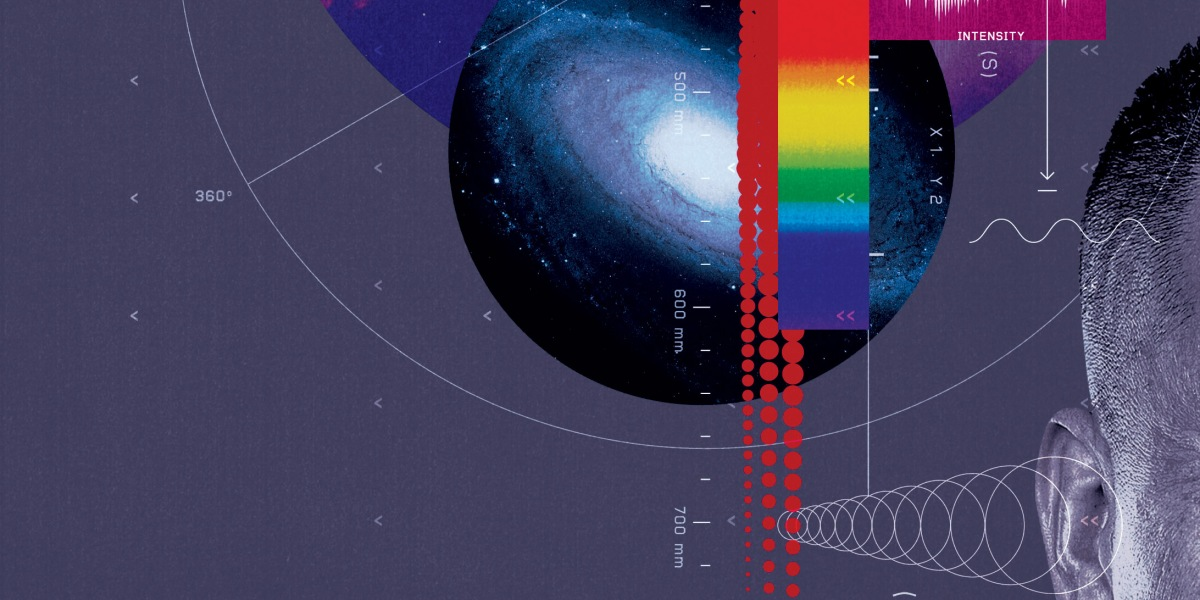
How sounds can turn us on to the wonders of the universe

June 2023 

Astronomy should, in principle, be a welcoming field for blind researchers. But across the board, science is full of charts, graphs, databases, and images that are designed to be seen.

So researcher Sarah Kane, who is legally blind, was thrilled three years ago when she encountered a technology known as sonification, designed to transform information into sound. Since then she’s been working with a project called Astronify, which presents astronomical information in audio form. 

For millions of blind and visually impaired people, sonification could be transformative—opening access to education, to once unimaginable careers, and even to the secrets of the universe. Read the full story.

—Corey S. Powell

We can still have nice things

A place for comfort, fun and distraction in these weird times. (Got any ideas? Drop me a line or tweet ’em at me.)

+ Are you brave enough to visit these iconic horror film locations? (The Blair Witch woods? Absolutely not!)
+ Forget counting sheep: counting spiders could be more beneficial for the environment. 🕷
+ Patrick Bateman’s skincare routine sounds exhausting (but also like it really works)
+ These cute polar bears are getting into the autumnal swing of things.
+ Berlin thinks we should party in a former chemical weapons lab. Who are we to disagree?

Read more

This article first appeared in The Checkup, MIT Technology Review’s weekly biotech newsletter. To receive it in your inbox every Thursday, and read articles like this first, sign up here.

We don’t usually delve into war and politics here in The Checkup, but this week is an exception. The spreading human devastation of the Israel-Gaza conflict has led to tensions and strife in the scientific community. Some of the academic biologists whose work we follow have already had their careers damaged from the blowback to their online statements. Reactions to the war are also raising questions about freedom of speech, and of thought—issues that are core to science.

On October 7, Hamas—the organization in command of the Gaza Strip, and which is designated a terrorist group by the US—launched a surprise attack into Israel, during which it killed more than 1,400 people and took hostages. Israel has been responding with a campaign of air strikes on Gaza that are rapidly raising the body count, with thousands more killed, according to news reports.

For a nation of fewer than 10 million, Israel plays an outsize role in science and medicine. It’s a land of biotech startups, the nation where covid-19 vaccines were first tried at scale, and home to many prominent biologists, among them Jacob Hanna, a stem-cell expert whose work we have covered and whose predictions about the direction of cutting-edge science I value.

Hanna is an Israeli citizen and a professor at the state-funded Weizmann Institute of Science in Rehovot, Israel. But he’s also a Palestinian from a Christian background whose social media profile has an image saying “F*ck the Occupation” as well as “Arab and Jews refuse to be enemies.”

A day after the attack, Hanna posted a public comment: “Barbarism has many forms. Occupation & 18 year old siege is also one of them,” he wrote, in a reference to the confinement of Palestinians to Gaza.

Hanna immediately came under withering scrutiny from other scientists, including some at his university. Why wasn’t he first and foremost condemning Hamas? Researchers questioned whether he should keep his funding, and Jonathan Kipnis, an immunologist at Washington University in St. Louis, said Hanna should leave Israel if he doesn’t like it.

“Maybe then he should move to Gaza and be the best scientist there and support his brethren,” Kipnis wrote on X, the site formerly known as Twitter. (Kipnis would later tell me, “It was a stupid tweet of mine, which I deleted and apologized.”)

To Hanna, the replies were “racist and condescending,” and he hasn’t changed his views. (He is against all violence and calls Hamas a “terrible violent and terrorist organization.”) But he also doesn’t want to only single out Hamas. Doing so, he says, would just be playing what he calls “the condemnation games” with people who are themselves unwilling to denounce Israel’s past actions toward Palestinians. 

But the pressure campaign has done its work. Hanna deleted his post about barbarism and several others. “I decided I don’t want politics on my feed anymore, and I don’t want fights,” he told me. “The posts were not intended to provoke fights. l was airing my thoughts and my frustration.”

Doing that has become risky. Some Israeli universities have said they will show “zero tolerance” for anyone who expresses “support for terrorism,” and there are reports of Arab Israeli students being disciplined for posts on social media sites.   

Meanwhile, here in the US, big donors and former university presidents have been insisting that academic institutions clearly condemn the Hamas attack, and not engage in “both-sidesism.” 

They want these organizations to acknowledge the massacre by Hamas. And they have a point. The Israeli military this week held a screening for journalists of uncensored footage from the attack, with scenes of people being dragged from cars, killed in their homes, or shot while hiding under tables.

The push to elicit condemnations of Hamas has been effective, causing the University of Pennsylvania and the University of California, San Diego, among others, to issue stronger statements. And the campaign continues. About 50 researchers at the university where Hanna works, for instance, signed a draft letter to the American Association for Cancer Research after it issued a vague statement on the conflict. In the reply, which we’ve seen, the Israeli researchers complain that the statement “bluntly fails to acknowledge the atrocities and their perpetrators. For example, the words “Hamas,” “Islamic Jihad,” or “terror attack” are not even included in the letter.”

It’s not as if scientists don’t ever take sides in political conflict. At the annual meeting of the European Society for Gene and Cell Therapy, which is being held in Brussels this week, the society is not accepting attendees whose entry is paid for by institutions in Russia or Belarus, citing Russia’s invasion of Ukraine.

“We know that many academics in Russia are opposed to the war in Ukraine,” the society says. “But we cannot accept your registration.”

Josh Dubnau, a geneticist at Stony Brook University, told me I was making a mistake in comparing the two situations. “Side-taking in Ukraine means denouncing an occupation,” he says. “The Ukrainians who are fighting back are fighting an army from a foreign nation that is targeting civilians.” 

In Israel and Gaza, he says, there is no such moral clarity, as both sides are killing civilians. Dubnau says the issue he’s concerned with is the efforts to “censure speech” of those scientists who are “criticizing Israeli atrocities.”

“It’s a kind of McCarthyism,” he believes, referring to the scare over communists in the 1950s in the US, which led to blacklists in Hollywood and at universities.

If so, one its first victims may be fruit fly biologist Michael Eisen, a prominent and outspoken advocate of “open” publishing, and—until this week—the editor of the influential journal eLife. 

On October 14, Eisen posted a satirical article from the Onion titled “Dying Gazans Criticized For Not Using Last Words To Condemn Hamas.” He added a summary of his own views in his post on X: “The Onion speaks with more courage, insight and moral clarity than the leaders of every academic institution put together. I wish there were a @TheOnion university.”

In response, eLife, which is backed by the Howard Hughes Medical Institute, fired him on Tuesday. In a statement, it said Eisen had previously been warned about his (notoriously brash) communication style, and that a “further incidence of this behavior” had led to the decision.

The situation at eLife, which depends on university scientists as editors, has led to a flurry of resignations—among both Eisen’s supporters and those who thought his comments amounted to intimidation of Israelis.  

Fede Pelisch, a member of eLife’s board, said on Wednesday he would resign because he disagreed with the decision to fire Eisen. In his own open letter, Pelisch says: “I have heard numerous concerns from people that now do not feel comfortable voicing their opinion if it does not conform to the orthodoxy.” He believes that “people feel silenced,” which he calls a “very harmful consequence for a Journal that is meant to ‘promote a research culture that values openness, integrity and equity, diversity and inclusion.”

So what are the consequences for science? Back in Israel, Hanna says his lab is at half speed as the conflict continues. And he’s still hurting, too. The brother of one of his students was killed in an air strike on a church in Gaza, he says. When I asked him for details about how biology research could be further affected in Israel, he wrote me this: 

“To my Israeli Jewish friends and colleagues in academia and biotech. Jealous of you that you are allowed to express feelings of pain and identification with your victimized innocent people without being put under house arrest and without being threatened with harm and cancellation. The threat of cancellation is relevant to companies, labs, individual scientists or all the above combined through funding, investment, recruiting. In the longer term, what is the ability of such ecosystem to become really international and diverse to attract talent, or is it sending signals of fascism and McCarthyism that might occasionally erupt, which means many don’t want to be part of such a system.”

Sadly, this war is likely still in its early days. Yesterday, it was revealed that Israel had briefly sent tanks into the Gaza Strip, and a ground invasion seems imminent. As the violence escalates, so will the fallout.


From our archives

Technology Review is an editorially independent publication of MIT. You can read or listen to MIT president Sally Kornbluth’s October 10 statement on events in the Middle East here: “Our community and the violence in Israel and Gaza.”

Small, high-tech, and communitarian—that’s why Israel was such an important player in covid-19 early on. The country was first to try vaccinating all its citizens, and in 2021, we reported on how it instituted a “green pass” system to encourage reopening.

When he’s not being told to quiet down, Jacob Hanna is turning stem cells into super-realistic models of human embryos. He even started a company to grow these synthetic embryo for several weeks and then collect their primitive organs for transplant medicine. I wrote about the startup, called Renewal Bio, and its controversial concepts last year.

In other news

Three people living with HIV been treated with the gene-editing tool CRISPR. Doctors hope the treatment will act as kind of antivirus software, removing the HIV from their bodies. (MIT Technology Review)

More than 40 states have sued Meta, the owner of Facebook and Instagram, charging it with causing digital addiction. They contend that “the company knowingly used features on its platforms to cause children to use them compulsively.” (New York Times)

How chill is cannabis? The widely legalized drug probably doesn’t treat anxiety as well as the promoters claim. (Wall Street Journal)

Read more

Here’s the easy game Li Xincheng has been playing at home. Her mother says a few words. Then the six-year-old, nicknamed Yiyi, repeats what she heard.

“Clouds, one by one, blossomed in the mountains,” says her mother, Qin Lixue, while covering her mouth so Yiyi can’t read her lips.

“Clouds, one, one, blossomed in big mountains” Yiyi replies.

It’s hard to believe that Yiyi was born entirely deaf.

But this year her family, who live in a high-rise block in the city of Dongguan, enrolled her in a study of a new type of gene therapy. During the procedure, doctors used a virus to add replacement DNA to the cells in Yiyi’s inner ear that pick up vibrations, allowing them to transmit sound to her brain.

In less than a month, her mother says, she was hearing with the treated ear for the first time. Yiyi can’t explain exactly what it’s like in words, but now, at school, she can hear the chime that ends naptime. She used to have to wait for the other kids to tell her.

Qin Lixue demonstrates how her deaf 6-year-old daughter Yiyi can hear after an experimental gene therapy treatment.
QIN LIXUE

Yiyi is one of several deaf children who scientists in China say are the first people ever to have their natural hearing pathway restored in a dramatic new demonstration of the possibilities of gene therapy. The feat is even more remarkable because until now, no drug of any kind has ever been able to improve hearing.

“We were careful, and a little bit nervous, because it was the first in the world,” says Yilai Shu, a surgeon and scientist at Fudan University in Shanghai who is leading the experiment. His team began the treatments last December, and before that he spent years developing the techniques involved, testing gene injections in countless mice and guinea pigs. “That was my project: How do we deliver this to the inner ear?” Shu says.

In the US and Europe, gene therapy has been notching successes, including restoring limited vision to people with genetic causes of blindness. Now Shu’s study, in which as many as 10 kids have been enrolled, may be remembered as China’s first domestic gene-therapy breakthrough, as well the most dramatic restoration of a lost sense yet achieved.

“Before the treatment, if you put them in a movie theater with the loudest sound, they wouldn’t hear it,” says Zheng-Yi Chen, an associate professor at Mass Eye and Ear, a Harvard-affiliated hospital in Boston, who helped design and plan the study. “Now they can hear close to normal speech, and one can hear a whisper.”

A huge step

Today, Shu is scheduled to present data on the first five children he treated at a meeting of the European Society for Gene and Cell Therapy in Brussels, Belgium. Four of them gained hearing in the treated ear, but one did not, possibly because of preexisting immunity to the type of virus used to convey new DNA into the body.

“Any hearing improvement I would call a total win, and getting patients to moderate hearing loss is remarkable,” says Lawrence Lustig, a physician at Columbia University who runs studies of hearing treatments. “As a first step, this is huge.”

The new treatment will not help everyone who is deaf. It applies only to one specific cause of deafness at birth: a defect in a gene that produces a protein called otoferlin. The inner ear contains about 16,000 hair cells, so called because they have comblike extensions that vibrate to different frequencies of sound. Without otoferlin, these cells can’t transmit the chemicals that relay information to the brain.

“These patients basically don’t have a signal coming from the hair cells,” says Chen.

Otoferlin gene defects are the cause of around 1% to  3% of cases of inborn deafness, and there are only about 900 new cases a year in China, meaning the condition is rare. But the Chinese success is expected to electrify researchers working on related genetic treatments. “This could be the gateway drug that drives a lot of funds toward other causes of deafness,” says Lustig. 

Breaking up a gene

The new treatment is designed to add a working copy of the otoferlin gene. Because of the gene’s large size—it is around 6,000 DNA letters long—it had to be broken into two parts, each packaged separately into millions of copies of a harmless virus. Shu then carefully injects the loaded viruses deep into a fluid-filled chamber in a part of the children’s ears called the cochlea.

Once inside the body, Shu says, the two sections of DNA recombine to make a complete gene able to guide the production of the missing otoferlin protein.

“This technique is not usually done clinically, because the recombination process can be rather inefficient,” says Nicole Paulk, CEO of Siren Biotechnology and an expert on this type of virus, called an adeno-associated virus, or AAV. “This said, if the data they described [is] true, then this is a fantastic result.”

Shu also thinks the treatment can be made more potent. But already, he says, the children’s hearing improved, on average, from not hearing anything under 95 decibels (as loud as a motorcycle) to hearing sounds at 50 to 55 decibels—about the level of a regular conversation.

“They reach maybe 60% to 65% of normal hearing,” says Shu. 

Can’t believe it worked

Some of the subjects are just toddlers, who can’t tell doctors anything about what their first experiences of sound are like. But their parents are seeing behavioral changes. According to Shu, one child, who had never spoken, has started to say “baba” and “mama” after the treatment. Shu believes children would ideally be treated at around one year of age, a key moment for speech development.

Yiyi is older, and like several of the children in the trial so far, she had previously received a cochlear implant, an electronic device that uses a receiver and electrodes to stimulate hearing by tapping directly into the main auditory nerve. With the implant in her right ear since she was two, Yiyi had already learned how to speak, although her mother says that when she disconnects it (the receiver and battery are external), “she can’t hear anything at all.”

That changed after the treatment, which was put into her other ear. It was only weeks later that Yiyi could hear naturally from that ear. Her mother notices that she sometimes disconnects her implant while playing with the neighbors.

“When I first heard about the trial, at first I didn’t believe it was real. I asked some audiologists, and they also said it might not be real,” she says. But after she traveled to Shanghai and met Shu and other doctors, she decided to enroll her daughter. “I still can’t quite believe that it worked,” she says.

Chen believes that gene therapy could offer better hearing than what can be achieved with an implant. “Cochlear implants are the most successful neural prosthesis ever developed,” he says, but they have limitations. With an implant, Chen says, “you may hear the music, but the nuance is totally gone—they just hear the beat. We hear wind in the trees and birds singing, but they can’t. So the goal for everyone has been how to reverse hearing loss.”

The decision to target Yiyi’s specific type of deafness was not an accident. Auditory hair cells respond relatively well to gene therapy, easily taking up new DNA. And they don’t grow or get replaced during a person’s life. This is a reason why very loud noises can lead to permanent hearing loss: they can kill the hair cells. But it also means that if a replacement gene is added to the cells, it could remain active for a lifetime, although Shu cautions it’s unknown how long the effect will persist.

Winning the race

The apparent success means the Chinese team has won the first lap in a race involving at least three Western biotechnology companies. Among them is Akouos, which last year was acquired for $500 million by Eli Lilly, and Regeneron’s Decibel Therapeutics. Both have opened clinical trials for gene therapies also targeting the otoferlin gene and Decibel has treated at least one patient.

The Chinese work was sponsored by a small biotech company, Shanghai Refreshgene Therapeutics. That company’s founder, Nova Liu, said treating hearing was part of a strategy to develop gene therapies with reasonable prices. That could be the case with treatments for the eye and ear, since injecting gene therapy into either can require around a thousandth the amount of material needed to administer those treatments as IV infusions. “In China the first element of commercialization is to be affordable,” says Liu.

For Yiyi, hearing better is a revelation, but there are some downsides. The family lives on the 15th floor of an apartment building, but there is a lot of traffic nearby whose rumble reaches their windows. Before the gene therapy, Yiyi would unplug the implant and hear nothing at all during the night.

Now, her mother says, “she’s complaining it’s too noisy.”

Read more
1 … 1,580 1,581 1,582 1,583 1,584 … 3,443