
This is today’s edition of The Download, our weekday newsletter that provides a daily dose of what’s going on in the world of technology.

Inside NASA’s bid to make spacecraft as small as possible

Since the 1970s, we’ve sent a lot of big things to Mars. But when NASA successfully sent twin Mars Cube One spacecraft, the size of cereal boxes, to the red planet in November 2018, it was the first time we’d ever sent something so small.

Just making it this far heralded a new age in space exploration. NASA and the community of planetary science researchers caught a glimpse of a future long sought: a pathway to much more affordable space exploration using smaller, cheaper spacecraft. 

There was a catch, though—one that NASA soon had to grapple with. Miniaturization can only go so far before it comes to a crashing halt against some very fundamental laws of physics. Read the full story.

—David W. Brown

This story is from our most recent print issue of MIT Technology Review, which is all about society’s hardest problems, and how we should tackle them. If you don’t subscribe already, sign up now to get future issues when they land.

RSV is on the rise but preventative drugs are in short supply

This year we were supposed to have more tools than ever before to protect kids from RSV (short for respiratory syncytial virus), including a new shot that’s given preventively to babies and vulnerable toddlers to protect them from the worst effects of the virus.

But now—just as rates of sickness are rising—this medicine is in short supply. The CDC issued an alert last week advising pediatricians to ration doses, reserving them for babies younger than six months and those with underlying conditions that place them at highest risk for severe RSV. 

The situation is frustrating to parents and pediatricians alike. But shouldn’t forecasting demand for this kind of preventative be relatively straightforward? And why was there such a mismatch between supply and demand in the first place? Read the full story.

—Cassandra Willyard

This story first appeared in The Checkup, MIT Technology Review’s weekly biotech newsletter. Sign up to receive it in your inbox every Thursday.

The must-reads

I’ve combed the internet to find you today’s most fun/important/scary/fascinating stories about technology.

1 Sam Bankman-Fried has been found guilty on all seven fraud charges 
But he’ll have to wait until March next year to find out his sentence. (Economist $)
+ The tech industry has already moved on, though. (NYT $)
+ It’s unlikely that SBF will be the last of his kind. (The Atlantic $)

2 Meta’s open-source AI comes at a price
Just because Llama 2 is publicly available doesn’t mean it’s cheap. (The Information $)
+ AI firms really don’t want to pay for training data. (Insider $)

3 We shouldn’t get complacent about covid this winter
The fact vaccines are much harder to get these days isn’t helping. (The Atlantic $)
+ Who benefits most from the new covid vaccines? (MIT Technology Review)

4 The AI boom is lining Big Tech’s pockets
The rich are becoming even richer thanks to their cloud investments. (WSJ $)

5 Surveillance tech is coming to a city near you 
City councils are investing in Fusus AI systems, but not all residents are happy. (404 Media)
+ Marseille’s battle against the surveillance state. (MIT Technology Review)

6 Zoonotic diseases are a growing threat
Animal-to-human diseases are forecast to kill many more people in future decades. (FT $)
+ Meet the scientist at the center of the covid lab leak controversy. (MIT Technology Review)

7 Forget the leap second—it’s time for the leap minute
Technically, it could bridge the two ways we tell the time. But is the world ready? (NYT $)

8 How online gambling ensnared a whole generation of Africans
Its governments are ill-equipped to protect residents who are becoming increasingly addicted. (Bloomberg $)
+ How mobile money supercharged Kenya’s sports betting addiction. (MIT Technology Review)

9 Airbnb isn’t what it used to be
Its cost is on the rise—and so are complaints. (Vox)
+ New York’s war against Airbnb has made it even more expensive to visit. (The Atlantic $)

10 We all know diet soda is bad for us 🥤
Maybe sweet protein substitutes could offer a healthier alternative. (Proto.Life)

Quote of the day

“The crypto industry might be new, the players like Sam Bankman-Fried may be new, but this kind of fraud is as old as time and we have no patience for it.”

— Damian Williams, the US attorney who led the prosecution of disgraced crypto founder Sam Bankman-Fried, has a solemn message for reporters outside the Manhattan courtroom, Reuters reports.

The big story

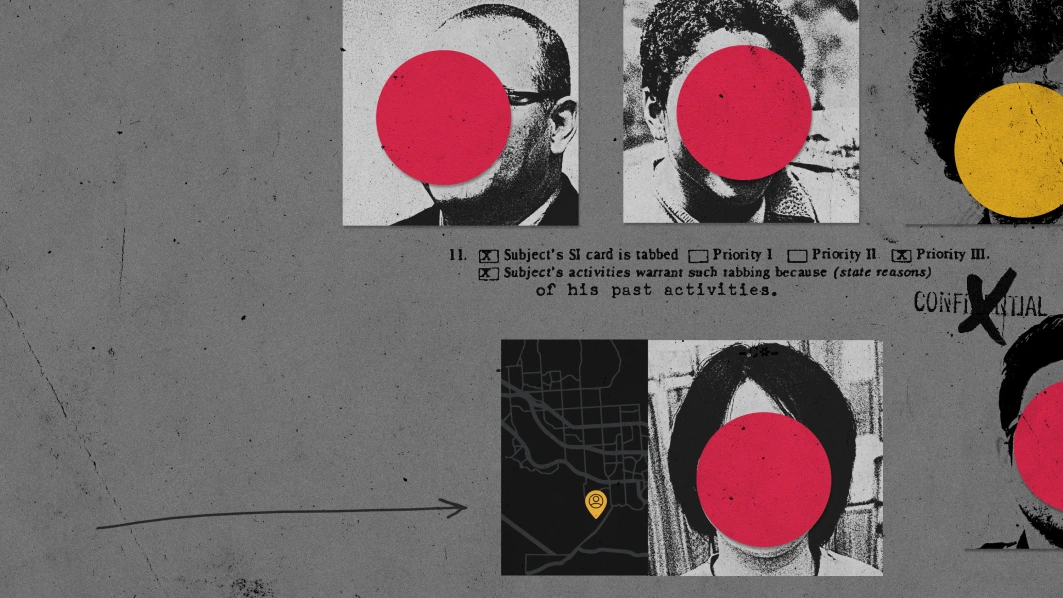
Inside the app Minnesota police used to collect data on journalists at protests
March 2022

Photojournalist J.D. Duggan was covering a protest in Minnesota in April 2021 when police officers surrounded him and others, and told them to get on the ground.

Officers sorted the press from the protesters, walked them to a parking lot, and began photographing them, one by one. They told Duggan the photos would be stored in an app. 

An investigation by MIT Technology Review found the data was collected using a tool called Intrepid Response, an easy way to almost instantly de-anonymize protest attendees and keep tabs on their movements. For some, the tool’s use is a dangerous step in the direction of authoritarianism. Read the full story.

—Sam Richards & Tate Ryan-Mosley

We can still have nice things

A place for comfort, fun and distraction in these weird times. (Got any ideas? Drop me a line or tweet ’em at me.)

+ Thanks to the wonders of AI, we’ve been blessed with one last Beatles song.
+ 65 years ago today, Laika the dog became the first canine in orbit! 🪐
+ Working as a Disney animation model looks absolutely exhausting.
+ The world’s most remote lighthouses is a great subject for a book.
+ Historic England is on the hunt for ghost signs—those beautifully faded painted signs advertising businesses and products of the past.

Read more

This article first appeared in The Checkup, MIT Technology Review’s weekly biotech newsletter. To receive it in your inbox every Thursday, and read articles like this first, sign up here.

Ahhh, fall. The leaves are changing. The air is crisp. And according to the CDC, RSV is on the rise.

This year we were supposed to have more tools than ever before to protect kids from RSV (short for respiratory syncytial virus), including a new shot called nirsevimab that’s given preventively to babies and vulnerable toddlers to protect them from the worst effects of the virus. But now—just as rates of sickness are rising—this medicine is in short supply. The CDC issued an alert last week advising pediatricians to ration doses, reserving them for babies younger than six months and those with underlying conditions that place them at highest risk for severe RSV. 

The situation is frustrating to parents and pediatricians alike. “We knew there were going to be many barriers to implementation of nirsevimab that we were anticipating, and pediatricians have been working hard to overcome those barriers, but we were assured by the manufacturer that supply would not be one of the barriers,” said Sean T. O’Leary, chair of the American Academy of Pediatrics’ Committee on Infectious Diseases, in an article on the AAP’s web site.

Demand was higher than expected, says Evan Berland, a spokesperson for Sanofi, which partnered with AstraZeneca to develop and market the drug. He adds that demand topped estimates “based on the most aggressive analogues of historical pediatric immunization launches.” 

But why was there such a mismatch between supply and demand in the first place? Shouldn’t forecasting demand for this kind of preventative be relatively straightforward? We know how many babies have been born, and when. 

“This was an unusual situation,” says Michael Ganio, senior director of pharmacy practice and quality at the American Society of Health-System Pharmacists. Nirsevimab is the first drug of its kind, so there’s no good baseline for comparison. What’s more, babies whose mothers have been vaccinated within 14 days of giving birth don’t need the medicine, which introduces additional uncertainty to the calculations. 

Even with some uncertainty, though, it shouldn’t have been a big surprise that demand would be high. You might not have heard of RSV, but you’ve almost certainly had it. It’s one of the seasonal viruses that cause cold-like symptoms in the fall and winter. For most of us, it’s annoying. Runny nose. Sore throat. Cough. Headache. But for babies and older adults it can cause serious illness. Each year, as many as 80,000 children under the age of five are hospitalized with RSV. And an estimated 100 to 300 children die.

Last year, RSV cases surged in the fall, overwhelming hospitals and prompting some states to call a state of emergency. So pediatricians were especially keen to have nirsevimab as an option this fall. In August, the CDC recommended the treatment for all infants younger than eight months old who are heading into their first RSV season. The agency also recommended the shot for older babies and toddlers up to 19 months who have a higher risk of serious illness due to RSV.  

Nirsevimab is a shot, but it’s not a vaccine. It’s a lab-made antibody that provides protection for about five months, the length of the RSV season. The antibody binds to the virus and blocks it from infecting cells, curbing severe disease. In clinical trials, the drug prevented 80% of RSV-related hospitalizations and 90% of ICU admissions compared with a placebo.

That’s why Emi Ithen was so excited for her daughter, who was born in March, to get nirsevimab. She mentioned it to the pediatrician when she took her daughter to see her in late September. By then her daughter, Eliza, was six months old and in day care. Ithen was worried about the viruses she might pick up there. RSV hits young children like Eliza particularly hard because their airways are tiny. So it doesn’t take much inflammation to make breathing difficult.

But in mid-October, when the family’s pediatrician tried to order the medication, she couldn’t find any. “She told my husband, ‘They just don’t have it. I can’t order it. It’s nowhere to be found,’” Ithen says.

Sanofi declined to disclose the number of doses already delivered, the size of the shortfall, or the timeline for restocking the drug. For now, the company isn’t accepting new orders of the 100-milligram dose, which is meant for babies weighing more than 11 pounds. The 50-milligram dose is available, Berland says, but is reserved for the smallest babies. Sanofi says it’s working with AstraZeneca, which manufactures the drug, to boost supplies. But producing monoclonal antibodies is a complex process that requires bioreactors full of living cells, and making more doses will take time. “Clinicians and caregivers should expect limited supply during this winter,” Ganio says. 

There are other options for protecting babies from RSV, but they don’t work for everyone. People who are pregnant can get immunized themselves between 32 and 36 weeks of pregnancy with a new vaccine called Abrysvo. They pass on the antibodies they generate to their  newborns. But that option only works for babies who haven’t been born yet.

Parents can also try to get a monoclonal antibody called palivizumab, which has been used for more than two decades. But it’s only available for babies who were born prematurely or have other risk factors that make them vulnerable to severe RSV infection. That wouldn’t apply in Eliza’s case. There are other drawbacks to palivizumab too. It has to be administered as five shots over five months, and it’s expensive: more than $1,000 a shot. Nirsevimab is about $500 and requires only a single dose. 

Ithen would like her daughter to get some protection against RSV, but she isn’t sure what else she can do. Eliza’s pediatrician still can’t stock the medication. And a larger health-care provider nearby didn’t have nirsevimab either. So like many parents, Ithen will just have to wait until the supply chain catches up. The risk that Eliza will get seriously ill with RSV is low, but it’s still a possibility. Ithen doesn’t want her to be one of the unlucky ones.   

Another thing

Engineered cell therapies have revolutionized treatment of blood cancers, and now researchers are finally seeing signs that they can work against solid tumors. “I’m very hopeful that this is going to be a dramatically useful therapy,” one scientist says.

Read more from Tech Review’s archive

Monoclonal antibodies take years to develop and test, but a new process might compress that timeline to less than a year. Anne Trafton has the story. 

In a previous edition of The Checkup, I wrote about how companies are working to develop  mRNA vaccines against a variety of diseases, including RSV. 

From around the web

The makers of a  gene therapy for sickle-cell disease won’t be required to do additional safety testing before the FDA decides whether to approve the drug. That’s the decision of an advisory committee that met this week to look at the treatment’s safety.  (New York Times) 

The second man to receive a pig heart has died after showing signs of rejecting the organ. (Wired)

Telehealth can make it easier and more convenient for consumers to get the medicines they need, but it’s also easier for them  to get medicines they don’t. (Undark)

The nirsevimab shortage illuminates troubling structural problems with how the US administers childhood vaccinations. (Vox)

Read more
1 … 1,567 1,568 1,569 1,570 1,571 … 3,443