
How exchange-traded funds and futures contracts can reach TradFi and turbocharge the growth of crypto markets.
Read more Polestar showcased this week its vision for the future: new tech and next-generation vehicles that the Swedish EV company owned by China’s Geely Holdings hopes will spark sales and spur an era of growth. The inaugural Polestar Day event in Los Angeles — designed to sell investors and journalists on its potential for a profitable […]
© 2023 TechCrunch. All rights reserved. For personal use only.
Welcome to Startups Weekly. Sign up here to get it in your inbox every Friday. If you’ve been following along with this newsletter, you’ll have noticed that I’ve been a little bit curious about AI — especially generative AI. I’m likely not the first person to make this observation, but AIs are extremely, painfully average. […]
© 2023 TechCrunch. All rights reserved. For personal use only.
This week, WordPress.com owner Matt Mullenweg confirmed his company would be shifting the majority of Tumblr’s workforce to other areas at parent company Automattic in light of the social blogging site’s continued financial woes. After acknowledging and explaining the meaning behind a leaked internal memo detailing the staff changes, Mullenweg then went on to field […]
© 2023 TechCrunch. All rights reserved. For personal use only.
It’s not enough to just know your business model and potential TAM. You also have to consider your personal goals.
© 2023 TechCrunch. All rights reserved. For personal use only.
Keeping up with an industry as fast-moving as AI is a tall order. So until an AI can do it for you, here’s a handy roundup of recent stories in the world of machine learning, along with notable research and experiments we didn’t cover on their own. This week in AI, OpenAI held the first of what […]
© 2023 TechCrunch. All rights reserved. For personal use only.
This is today’s edition of The Download, our weekday newsletter that provides a daily dose of what’s going on in the world of technology.
How open-source drug discovery could help us in the next pandemic
When the covid pandemic hit, our antiviral coffers were bare. After all, developing drugs for diseases that don’t pose an immediate threat isn’t exactly lucrative. But what would happen if we took profit out of the equation and made drug discovery a collaborative process rather than a competitive one?
The researchers behind the Covid Moonshot, an open-science initiative to develop antivirals that began back in March 2020, published their results this week. The effort produced 18,000 compound designs that led to the synthesis of 2,400 compounds. One of those became the basis for what is now the project’s lead candidate: a compound that targets the coronavirus’s main viral enzyme.
Maybe that doesn’t feel like a huge win. Even if the compound works, it will likely take many more years to develop it into a drug. But the need for another antiviral that’s ready for the next pandemic or next outbreak or the next variant is still very relevant. Read the full story.
—Cassandra Willyard
This story is from The Checkup, MIT Technology Review’s weekly biotech newsletter. Sign up to receive it in your inbox every Thursday.
How this Turing Award–winning researcher became a legendary academic advisor
Every academic field has its superstars. But a rare few achieve superstardom not just by demonstrating individual excellence but also by consistently producing future superstars.
Computer science has its own such figure: Manuel Blum, who won the 1995 Turing Award—the Nobel Prize of computer science. He is the inventor of the captcha—a test designed to distinguish humans from bots online.
Three of Blum’s students have also won Turing Awards, and many have received other high honors in theoretical computer science, such as the Gödel Prize and the Knuth Prize. More than 20 hold professorships at top computer science departments. But is there some formula to his success? Read the full story.
—Sheon Han
This story is from our most recent print issue of MIT Technology Review, which is all about society’s hardest problems, and how we should tackle them. If you don’t already, subscribe now to get future issues when they land.
The must-reads
I’ve combed the internet to find you today’s most fun/important/scary/fascinating stories about technology.
1 Humane wants to sell us a future of ‘ambient computing’
The company wants to liberate us from smartphones—via even more technology. (NYT $)
+ The voice and touch-only interface sounds pretty fiddly. (TechCrunch)
+ What are we supposed to use it for, exactly? (The Verge)
2 Google has launched a new anti-terrorism content tool
Altitude gives smaller platforms the ability to track, detect and remove terror content. (Wired $)
+ Google has a new tool to outsmart authoritarian internet censorship. (MIT Technology Review)
3 Apple’s €14.3 billion tax dispute is back on the agenda
An EU court decision from 2020 has been called into question, and a new assessment could be on the horizon. (FT $)
+ It’s been ordered to pay $25 million in a hiring discrimination case, too. (The Verge)
4 Video chat site Omegle is no more
After a recent lawsuit found it gave sexual predators free rein online. (Fast Company $)
+ The site had a long, problematic history of sexual abuse issues. (Wired $)
5 Meta is staging a bold return to China
More than a decade after Facebook was blocked from operating there. (WSJ $)
+ The company needs China more than it’s willing to admit. (Rest of World)
6 Labcorp’s workers say they’re burnt out
The healthcare company’s rigid productivity targets are pushing them to the brink. (404 Media)
7 Amazon is officially a fashion flop 
Its hopes of becoming a bricks and mortar clothing giant have been dashed. (The Information $)
+ The war over fast fashion is heating up. (MIT Technology Review)
8 For adult content creators, OnlyFans is the pathway to mainstream success
The platform dominates the industry, but its stars don’t care. (WP $)
+ Fame in the age of AI looks a little different these days. (Economist $)
9 Meet the disaster microbiologists
Catastrophes can alter the environment, and microbes that affect our health, forever. (Proto.Life)
+ Your microbiome ages as you do—and that’s a problem. (MIT Technology Review)
10 Hollywood’s old guard are unlikely TikTok sensations
Iconic directors are staring down entirely different lenses—and they like what they see. (The Guardian)
Quote of the day
“It was just freaking out. Broken needles. Chaos.”
—Amardeep Singh, a UX designer, describes the carnage caused when he tried to feed an old-school sewing machine a modern fabric to the Wall Street Journal.
The big story
How scientists want to make you young again
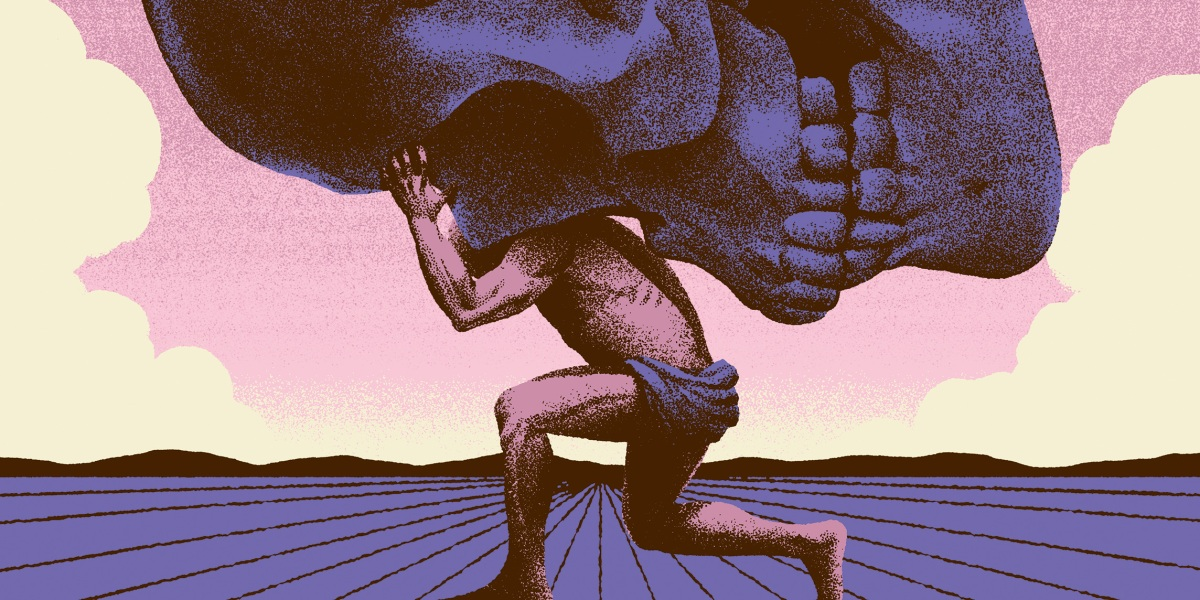
A little over 15 years ago, scientists at Kyoto University in Japan made a remarkable discovery.
When they added just four proteins to a skin cell and waited about two weeks, some of the cells underwent an unexpected and astounding transformation: they became young again. They turned into stem cells almost identical to the kind found in a days-old embryo, just beginning life’s journey.
Now, after more than a decade of studying and tweaking so-called cellular reprogramming, a number of biotech companies and research labs say they have tantalizing hints that the process could be the gateway to an unprecedented new technology for age reversal. Read the full story.
—Antonio Regalado
We can still have nice things
A place for comfort, fun and distraction in these weird times. (Got any ideas? Drop me a line or tweet ’em at me.)
+ Say hello to the Kenyan volcano toad: a newly-discovered amphibian with a penchant for chilling in high-risk locations.
+ Talking of volcanoes, scientist Jackie Caplan-Auerbach knows how to tune into their songs (yes really!)
+ David Lynch, Toto, and Dune: what a combo.
+ Kick back and relax with this list of the greatest debut albums—there’s some real bangers in there.
+ I’ll have my pizza with a side order of Pearl Jam, please.
This article first appeared in The Checkup, MIT Technology Review’s weekly biotech newsletter. To receive it in your inbox every Thursday, and read articles like this first, sign up here.
When the covid pandemic hit, our antiviral coffers were essentially bare. Sure, pharmaceutical companies had developed drugs to combat influenza and a handful of chronic infections. But they hadn’t had much of an incentive to develop drugs against other viruses with the potential to start pandemics. Developing drugs for diseases that don’t pose an immediate threat isn’t exactly lucrative.
But what would happen if we took profit out of the equation and made drug discovery a collaborative process rather than a competitive one? That was the idea behind the Covid Moonshot, an open-science initiative to develop antivirals against the coronavirus that began back in March 2020 with a Twitter plea for covid drug designs. ”Calling all medicinal chemists!” wrote Nir London, an engineer at the Weizmann Institute of Science who works in drug discovery.
This week the researchers behind the project published their results in Science. The effort, which relied on more than 200 volunteer scientists from 25 countries, produced 18,000 compound designs that led to the synthesis of 2,400 compounds. One of those became the basis for what is now the project’s lead candidate: a compound that targets the coronavirus’s main viral enzyme. The enzyme, known as Mpro, snips long viral proteins into short chunks, a key step in viral replication. The compound stops this enzyme from working. Paxlovid, an antiviral developed by Pfizer after the pandemic began, hits the same target.
Maybe that doesn’t feel like a huge win. Even if the compound works, it will likely take many more years to develop it into a drug. But “it’s still gone remarkably quickly if you were to compare that with most drug discovery stories,” says Charles Mowbray, discovery director of the nonprofit Drugs for Neglected Diseases Initiative (DNDi), a Moonshot participant.
And although developing another drug now, in the waning days of the covid pandemic, might not seem as urgent as it once was, “the need for another antiviral that’s ready for the next pandemic or next outbreak or the next variant is still very relevant,” he adds.
The US National Institute of Allergy and Infectious Diseases has identified 10 virus families that hold pandemic potential. Some of these families contain viruses that you’ve no doubt heard of—Ebola, West Nile, measles, hepatitis A. Other viruses are more obscure. For example, you probably haven’t heard of La Crosse, Oropouche, or Cache Valley, all peribunyaviruses. We have antiviral drugs for smallpox, and now for the coronavirus, but for many of these families, we have no therapies at all. No pill. No antibody. Nothing. That may be a problem open-source drug development could solve.
There’s another potential benefit to an open-source model: global access. The current covid therapies are under patent protection and are unaffordable for much of the globe. Even in the US, these drugs are pricey. When Paxlovid was introduced, in 2021, the US bought more than 20 million treatment courses for $529 each and made them available free of charge. But Pfizer says the price will more than double, to $1,390 per dose, when the company starts selling the drug in the commercial market in 2024.
Because the Covid Moonshot is developing drugs that won’t be under patent protection, they’ll go straight to generic. “The drug can be made by more than one manufacturer, can be distributed to everybody who would need it when needed, and not have to wait for sometimes slow and painful licensing negotiations, which companies may or may not be willing to do,” Mowbray says.
What happens next? DNDi will be taking the lead on developing the lead candidate, called DNDI-6501, shepherding it through preclinical development. And the Covid Moonshot team will continue its work too. Last year, the US National Institutes of Health awarded the consortium nearly $69 million to continue developing oral antivirals. They’ll be developing drugs to treat not only the coronavirus but also West Nile, Zika, dengue, and enteroviruses.
No medicine has ever made it to market through an entirely open-source process. But that doesn’t mean that the model can’t make a difference in drug development. The pharma company Shionogi used data from the Covid Moonshot to help develop its antiviral ensitrelvir, which is already approved for emergency use in Japan. “Contrary to what is often assumed, openness is not a barrier to translation of impactful molecules, either directly or by pharma,” says Matthew Todd, a chemist at University College London and the founder of Open Source Pharma.
Mowbray would like to see more sharing in drug research and development. We don’t know what virus will spark the next pandemic. Will it be a variant of something we’ve seen before, or an entirely new virus? The idea that a single entity would have enough antiviral drugs ready to manage the risks seems unrealistic, he says. “If we’re prepared to share what we’re doing between us, we probably have a much better chance of having the right drug candidates ready.”
Another thing
Preparing for the next pandemic requires more than a drug development overhaul. We also need to beef up our early warning system. In 2021, the Centers for DIsease Control and Prevention launched a surveillance project at a handful of major US airports to detect emerging SARS-CoV-2 variants.
Now the agency plans to expand that program to cover 30 new pathogens, including influenza and RSV. For now, the additional testing will take place at just four airports: San Francisco International, JFK, Logan, and Dulles.
Here’s how it works:International travelers flying into airports where the surveillance program operates can volunteer to collect their own nasal swab samples. Those samples go to a lab for PCR testing. Positive samples undergo whole-genome sequencing. The program also collects samples of wastewater from individual planes and from the common drain into which all plane wastewater gets dumped.
“One sample from an aircraft coming from a geographic destination afar can give us information potentially about 200 to 300 people that were on that plane,” Cindy Friedman, who leads the CDC’s traveler genomic surveillance program, told CNN.
As of last month, the surveillance program had tested more than 370,000 travelers from more than 135 countries and sequenced more than 14,000 samples.
Read more from Tech Review’s archive
Way back in 2021 (seems like a lifetime ago) I wrote about the paltry supply of antivirals and the hunt for new drugs to treat covid.
Earlier this year, Rhiannon Williams told us about the software used to place new covid variants on the SARS-CoV-2 family tree.
The pandemic provided a glut of data on the coronavirus and its evolution over time. Linda Nordling wrote about how the “avalanche of genomic sequencing” might be used to spot emerging threats and track other diseases.
In 2020, Antonio Regalado unpacked how covid vaccine development was likely to unfold and what it would take for pharma to prove that a vaccine works.
In other news
A man with Parkinson’s regained the ability to walk normally thanks to a new neuroprosthesis that delivers electrical pulses to his spinal cord at the push of a button. Abdullahi Tsanni has the story.
Next week, MIT Technology Review will be hosting EmTech MIT, our flagship event on emerging technology and global trends. There’s still time to register to join us on MIT’s campus or online, and we’ve got a special discount for newsletter readers at this link.
From around the web
The FDA approved a new weight-loss drug, giving Wegovy a competitor. (New York Times)
The National Institutes of Health has a new leader. The Senate voted to confirm cancer surgeon Monica Bertagnolli this week, making her the second woman to head NIH. (Washington Post)
Brain-reading devices, which record neural activity and then interpret it, are coming. They might change how we communicate, focus, and relax. (Nature)
Could a common virus be to blame for some of the bad side effects in patients who receive T-cell therapies to treat their cancer? (Stat)