
U.S. government agencies have spent months, sometimes years, investigating Binance in the lead-up to unsealing an indictment against the exchange.

U.S. government agencies have spent months, sometimes years, investigating Binance in the lead-up to unsealing an indictment against the exchange.

As hype builds for spot Bitcoin ETFs in the U.S., some are concerned the industry is moving away from the “core promise” of cryptocurrencies.

Cryptocurrencies flash mixed signals as market participants digest the details of CZ’s guilty plea and the DOJ’s $4.3 billion settlement with Binance.
This is today’s edition of The Download, our weekday newsletter that provides a daily dose of what’s going on in the world of technology.
What’s next for OpenAI
The past few days have been a fever dream in the AI world. The board of OpenAI, the world’s hottest AI company, shocked everyone by firing CEO Sam Altman. Cue an AI-safety coup, chaos, and a new job at Microsoft for Altman.
The news has sent shockwaves through the industry, particularly because Altman has become generative AI’s poster boy over the past year. Hundreds of OpenAI employees have since signed a letter threatening to quit, following in the footsteps of a number of senior workers who chose to resign in support. It’s clear that AI’s biggest player is in a state of flux.
If you’ve been offline, our AI experts Melissa Heikkilä and Will Douglas Heaven have drawn up a blow-by-blow timeline of what happened, and what all the drama means for the AI industry as a whole. Read the full story.
This story is from The Algorithm, our weekly newsletter giving you the inside track on all things AI. Sign up to receive it in your inbox every Monday.
Want to learn more about the latest goings-on at OpenAI? Join MIT Technology Review’s AI team Will Douglas Heaven and Melissa Heikkilä, along with executive editor Niall Firth for a virtual event as they dissect this news at 11am ET on Wednesday. We’ll have more details on how to sign up in tomorrow’s edition of The Download, so stay tuned!
Meta is giving researchers more access to Facebook and Instagram data
The news: Meta is releasing a new transparency product called the Meta Content Library and API. The new tool will allow select researchers to access publicly available data on Facebook and Instagram in an effort to give a more overarching view of what’s happening on the platforms.
Why it matters: The move comes as social media companies are facing public and regulatory pressure to increase transparency about how their products work, specifically recommendation algorithms, and their impact. Read the full story.
—Tate Ryan-Mosley
The 2024 35 Innovators Under 35 competition is now open for nominations
For more than two decades, MIT Technology Review has been celebrating brilliant young innovators through our annual 35 Innovators Under 35 competition. Past winners include Andrew Ng, Feng Zhang, Joy Buolamwini, among other distinguished scientists, entrepreneurs, humanitarians, and businesspeople.
This year’s competition is now open for nominations, right up until Monday January 22, 2024. it’s easy to nominate someone, or to apply yourself, and you can do it right here. For more information, read the full story.
The must-reads
I’ve combed the internet to find you today’s most fun/important/scary/fascinating stories about technology.
1 Sam Altman is plotting a return to OpenAI
But he’ll need the remaining board members to leave first. (The Verge)
+ The founder has a touch of Steve Jobs about him. (NYT $)
+ Microsoft is determined to keep working with Altman, no matter what. (Bloomberg $)
+ Why OpenAI’s investors had no say in Altman’s sacking. (Economist $)
+ OpenAI’s current CEO has a colossal task ahead of him trying to steady the ship (assuming he stays in post). (WP $)
2 The EV industry needs to clean up its game
That’s the prevailing message from climate activists protesting the LA Auto Show. (Wired $)
+ The shipping industry is making decent headway, though. (Knowable Magazine)
+ Cars are still cars—even when they’re electric. (MIT Technology Review)
3 China is cracking down on anonymous social media accounts
And it’s leading some influencers to quit the platforms altogether. (Rest of World)
+ Now China wants to censor online comments. (MIT Technology Review)
4 We’ve been getting online algorithms all wrong
Researchers have successfully turned a long-standing conclusion on its head. (Quanta Magazine)
5 India’s IT workers are in high demand
The world wants skilled IT professionals, and they’re waging a war for the top talent. (FT $)
6 Commercial flights are being targeted by powerful spoofing attacks
Their GPS systems are receiving false signals, and no one knows who to blame. (Motherboard)+ Ghost ships, crop circles, and soft gold: A GPS mystery in Shanghai. (MIT Technology Review)
7 Christopher Nolan isn’t planning on tackling AI
Mainly because he doesn’t believe he could surpass 2001: A Space Odyssey. (The Atlantic $)
8 Nothing’s iMessage app was a colossal failure
Its end-to-end encryption promises weren’t strictly accurate. (Ars Technica)
9 We can’t stop watching massive families online
They’re increasingly becoming anomalies, as American families are shrinking. (Vox)
10 Tinder is trying—and failing—to get down with Gen Z
How do you do, fellow love matches? (Insider $)
+ Here’s how the net’s newest matchmakers help you find love. (MIT Technology Review)
Quote of the day
“Sam is still Sam, and he is running the show.”
—S. Somasegar, a former Microsoft executive, tells the New York Times Sam Altman is very much still in the driving seat at OpenAI, despite the recent tumult.
The big story
Psychedelics are having a moment and women could be the ones to benefit
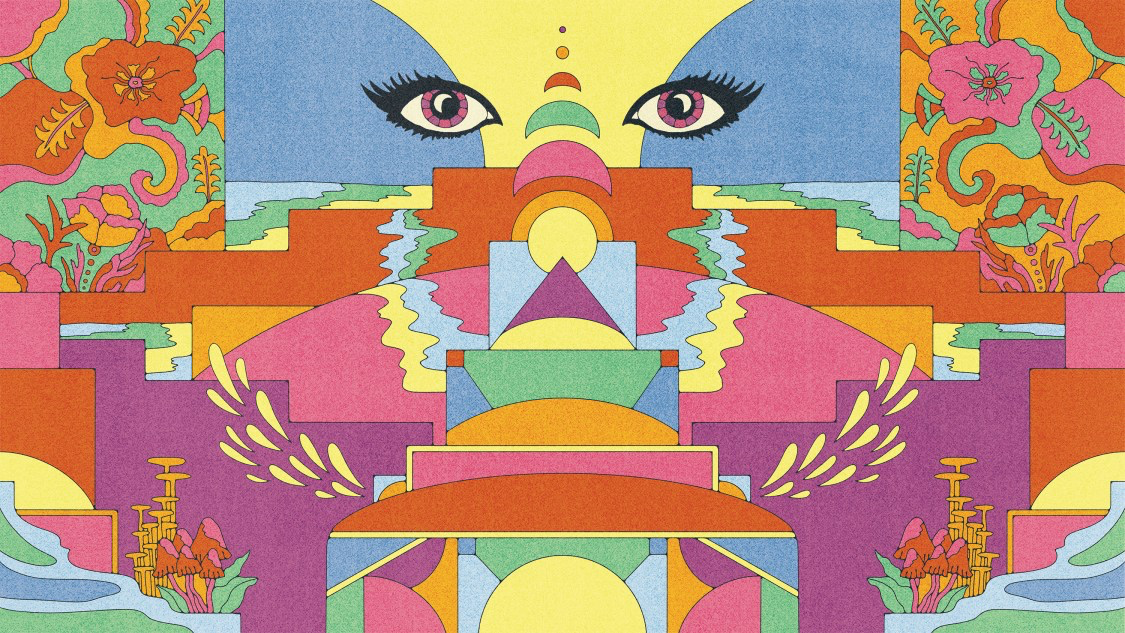
Psychedelics are having a moment. After decades of prohibition and vilification, they are increasingly being employed as therapeutics. Drugs like ketamine, MDMA, and psilocybin mushrooms are being studied in clinical trials to treat depression, substance abuse, and a range of other maladies.
And as these long-taboo drugs stage a comeback in the scientific community, it’s possible they could be especially promising for women. Read the full story.
—Taylor Majewski
We can still have nice things
A place for comfort, fun and distraction in these weird times. (Got any ideas? Drop me a line or tweet ’em at me.)
+ Not only was Anthony Bourdain an exceptional culinary talent, he had pretty great music taste too.
+ Would you eat a stranger’s leftovers? No chance.
+ Did you know that the Macy’s Thanksgiving Day Parade wasn’t New York City’s first Thanksgiving parade?
+ Synesthesia is a fascinating condition, and we owe much of what we understand about it to one man.
+ Don’t chuck away that broken appliance—you may be able to fix it.
We like to think of the annual 35 Innovators Under 35 competition as the flip side of our popular 10 Breakthrough Technologies list. With 10 Breakthrough Technologies we ask: What groundbreaking innovations will affect our lives over the next few years? With Innovators Under 35, we ask: Which young people are doing the most promising work in technology today, and what does that tell us about what’s coming next?
You can help us find our next group of great young innovators. Our 35 Innovators Under 35 competition for 2024 is now open for nominations. Nominations are open from now until 10 p.m. US Eastern time on Monday, January 22, 2024. For the full details please visit our frequently asked questions page.
We’ve been publishing a list of young innovators every year for more than two decades now. Past winners include Andrew Ng, Feng Zhang, Joy Buolamwini, Sharon Li, and Julia Joung. Many of these distinguished scientists, entrepreneurs, humanitarians, and businesspeople list the honor of being selected prominently on their bios.
You might ask who would make a good candidate for the list. In short, we’re looking for people doing interesting work in all areas of technology—biotechnology, artificial intelligence, climate and energy, computing, robotics, nanomaterials, and any other technological area you can think of. Sometimes our winners are inventors. Others are entrepreneurs employing technology in a new or interesting way, and yet others are working to use technology to right a social injustice or make life easier for people in difficult circumstances.
We like to see a specific achievement. We like to be able to answer questions like: What’s the innovation here? What did this person achieve that hasn’t been done before in quite this way? How is this person working toward solving a major technology problem so as to make a huge difference in people’s lives?
Yes, many of our candidates come from elite research universities or big corporations, but that’s not a requirement. We also like to feature inventors, startup founders, and social activists using technology in creative ways to make a difference in their communities.
Does this description sound like anyone you know? If so, it’s easy to nominate someone, or to apply yourself, and you can do it right here.