
The fast move likely signals short-term profit taking after ether’s rapid 30% rally, one observer noted.
Read more Events to consider following the first day of the conference.
Read more Government officials and AI industry executives agreed on Tuesday to apply elementary safety measures in the fast-moving field and establish an international safety research network. Nearly six months after the inaugural global summit on AI safety at Bletchley Park in England, Britain and South Korea are hosting the AI safety summit this week in Seoul. The […]
© 2024 TechCrunch. All rights reserved. For personal use only.
Artificial intelligence has brought a big boost in productivity—to the criminal underworld.
Generative AI provides a new, powerful tool kit that allows malicious actors to work far more efficiently and internationally than ever before, says Vincenzo Ciancaglini, a senior threat researcher at the security company Trend Micro.
Most criminals are “not living in some dark lair and plotting things,” says Ciancaglini. “Most of them are regular folks that carry on regular activities that require productivity as well.”
Last year saw the rise and fall of WormGPT, an AI language model built on top of an open-source model and trained on malware-related data, which was created to assist hackers and had no ethical rules or restrictions. But last summer, its creators announced they were shutting the model down after it started attracting media attention. Since then, cybercriminals have mostly stopped developing their own AI models. Instead, they are opting for tricks with existing tools that work reliably.
That’s because criminals want an easy life and quick gains, Ciancaglini explains. For any new technology to be worth the unknown risks associated with adopting it—for example, a higher risk of getting caught—it has to be better and bring higher rewards than what they’re currently using.
Here are five ways criminals are using AI now.
Phishing
The biggest use case for generative AI among criminals right now is phishing, which involves trying to trick people into revealing sensitive information that can be used for malicious purposes, says Mislav Balunović, an AI security researcher at ETH Zurich. Researchers have found that the rise of ChatGPT has been accompanied by a huge spike in the number of phishing emails.
Spam-generating services, such as GoMail Pro, have ChatGPT integrated into them, which allows criminal users to translate or improve the messages sent to victims, says Ciancaglini. OpenAI’s policies restrict people from using their products for illegal activities, but that is difficult to police in practice, because many innocent-sounding prompts could be used for malicious purposes too, says Ciancaglini.
OpenAI says it uses a mix of human reviewers and automated systems to identify and enforce against misuse of its models, and issues warnings, temporary suspensions and bans if users violate the company’s policies.
“We take the safety of our products seriously and are continually improving our safety measures based on how people use our products,” a spokesperson for OpenAI told us. “We are constantly working to make our models safer and more robust against abuse and jailbreaks, while also maintaining the models’ usefulness and task performance,” they added.
In a report from February, OpenAI said it had closed five accounts associated with state-affiliated malicous actors.
Before, so-called Nigerian prince scams, in which someone promises the victim a large sum of money in exchange for a small up-front payment, were relatively easy to spot because the English in the messages was clumsy and riddled with grammatical errors, Ciancaglini. says. Language models allow scammers to generate messages that sound like something a native speaker would have written.
“English speakers used to be relatively safe from non-English-speaking [criminals] because you could spot their messages,” Ciancaglini says. That’s not the case anymore.
Thanks to better AI translation, different criminal groups around the world can also communicate better with each other. The risk is that they could coordinate large-scale operations that span beyond their nations and target victims in other countries, says Ciancaglini.
Deepfake audio scams
Generative AI has allowed deepfake development to take a big leap forward, with synthetic images, videos, and audio looking and sounding more realistic than ever. This has not gone unnoticed by the criminal underworld.
Earlier this year, an employee in Hong Kong was reportedly scammed out of $25 million after cybercriminals used a deepfake of the company’s chief financial officer to convince the employee to transfer the money to the scammer’s account. “We’ve seen deepfakes finally being marketed in the underground,” says Ciancaglini. His team found people on platforms such as Telegram showing off their “portfolio” of deepfakes and selling their services for as little as $10 per image or $500 per minute of video. One of the most popular people for criminals to deepfake is Elon Musk, says Ciancaglini.
And while deepfake videos remain complicated to make and easier for humans to spot, that is not the case for audio deepfakes. They are cheap to make and require only a couple of seconds of someone’s voice—taken, for example, from social media—to generate something scarily convincing.
In the US, there have been high-profile cases where people have received distressing calls from loved ones saying they’ve been kidnapped and asking for money to be freed, only for the caller to turn out to be a scammer using a deepfake voice recording.
“People need to be aware that now these things are possible, and people need to be aware that now the Nigerian king doesn’t speak in broken English anymore,” says Ciancaglini. “People can call you with another voice, and they can put you in a very stressful situation,” he adds.
There are some for people to protect themselves, he says. Ciancaglini recommends agreeing on a regularly changing secret safe word between loved ones that could help confirm the identity of the person on the other end of the line.
“I password-protected my grandma,” he says.
Bypassing identity checks
Another way criminals are using deepfakes is to bypass “know your customer” verification systems. Banks and cryptocurrency exchanges use these systems to verify that their customers are real people. They require new users to take a photo of themselves holding a physical identification document in front of a camera. But criminals have started selling apps on platforms such as Telegram that allow people to get around the requirement.
They work by offering a fake or stolen ID and imposing a deepfake image on top of a real person’s face to trick the verification system on an Android phone’s camera. Ciancaglini has found examples where people are offering these services for cryptocurrency website Binance for as little as $70.
“They are still fairly basic,” Ciancaglini says. The techniques they use are similar to Instagram filters, where someone else’s face is swapped for your own.
“What we can expect in the future is that [criminals] will use actual deepfakes … so that you can do more complex authentication,” he says.

Jailbreak-as-a-service
If you ask most AI systems how to make a bomb, you won’t get a useful response.
That’s because AI companies have put in place various safeguards to prevent their models from spewing harmful or dangerous information. Instead of building their own AI models without these safeguards, which is expensive, time-consuming, and difficult, cybercriminals have begun to embrace a new trend: jailbreak-as-a-service.
Most models come with rules around how they can be used. Jailbreaking allows users to manipulate the AI system to generate outputs that violate those policies—for example, to write code for ransomware or generate text that could be used in scam emails.
Services such as EscapeGPT and BlackhatGPT offer anonymized access to language-model APIs and jailbreaking prompts that update frequently. To fight back against this growing cottage industry, AI companies such as OpenAI and Google frequently have to plug security holes that could allow their models to be abused.
Jailbreaking services use different tricks to break through safety mechanisms, such as posing hypothetical questions or asking questions in foreign languages. There is a constant cat-and-mouse game between AI companies trying to prevent their models from misbehaving and malicious actors coming up with ever more creative jailbreaking prompts.
These services are hitting the sweet spot for criminals, says Ciancaglini.
“Keeping up with jailbreaks is a tedious activity. You come up with a new one, then you need to test it, then it’s going to work for a couple of weeks, and then Open AI updates their model,” he adds. “Jailbreaking is a super-interesting service for criminals.”
Doxxing and surveillance
AI language models are a perfect tool for not only phishing but for doxxing (revealing private, identifying information about someone online), says Balunović. This is because AI language models are trained on vast amounts of internet data, including personal data, and can deduce where, for example, someone might be located.
As an example of how this works, you could ask a chatbot to pretend to be a private investigator with experience in profiling. Then you could ask it to analyze text the victim has written, and infer personal information from small clues in that text—for example, their age based on when they went to high school, or where they live based on landmarks they mention on their commute. The more information there is about them on the internet, the more vulnerable they are to being identified.
Balunović was part of a team of researchers that found late last year that large language models, such as GPT-4, Llama 2, and Claude, are able to infer sensitive information such as people’s ethnicity, location, and occupation purely from mundane conversations with a chatbot. In theory, anyone with access to these models could use them this way.
Since their paper came out, new services that exploit this feature of language models have emerged.
While the existence of these services doesn’t indicate criminal activity, it points out the new capabilities malicious actors could get their hands on. And if regular people can build surveillance tools like this, state actors probably have far better systems, Balunović says.
“The only way for us to prevent these things is to work on defenses,” he says.
Companies should invest in data protection and security, he adds.
For individuals, increased awareness is key. People should think twice about what they share online and decide whether they are comfortable with having their personal details being used in language models, Balunović says.
This is today’s edition of The Download, our weekday newsletter that provides a daily dose of what’s going on in the world of technology.
AI models can outperform humans in tests to identify mental states
Humans are complicated beings. The ways we communicate are multilayered, and psychologists have devised many kinds of tests to measure our ability to infer meaning and understanding from interactions with each other.
AI models are getting better at these tests. New research published has found that some large language models perform as well as, and in some cases better than, humans when presented with tasks designed to test the ability to track people’s mental states, known as “theory of mind.”
This doesn’t mean AI systems are actually able to work out how we’re feeling. But it does demonstrate that these models are performing better and better in experiments designed to assess abilities that psychologists believe are unique to humans. Read the full story.
—Rhiannon Williams
And, if you’re interested in learning more about why the way we test AI is so flawed, read this piece by our senior AI editor Will Douglas Heaven.
A device that zaps the spinal cord gave paralyzed people better control of their hands
Fourteen years ago, a journalist named Melanie Reid attempted a jump on horseback and fell. The accident left her mostly paralyzed from the chest down. Eventually she regained control of her right hand, but her left remained, in her own words, “useless.”
Now, thanks to a new noninvasive device that delivers electrical stimulation to the spinal cord, she has regained some control of her left hand. She can use it to sweep her hair into a ponytail, scroll on a tablet, and even squeeze hard enough to release a seatbelt latch. These may seem like small wins, but they’re crucial.
Reid was part of a 60-person clinical trial, from which the vast majority of participants benefited. The trial was the last hurdle before the researchers behind the device could request regulatory approval, and they hope it might be approved in the US by the end of the year. Read the full story.
—Cassandra Willyard
Join us at EmTech Digital this week!
Between the world leaders gathering in Seoul for the second AI Safety Summit this week and Google and OpenAI’s launches of their supercharged new models, Astra and GPT-4o, the timing could not be better. AI feels hotter than ever.
This year’s EmTech Digital, MIT Technology Review’s flagship AI conference, will be all about how we can harness the power of generative AI while mitigating its risks,and how the technology will affect the workforce, competitiveness, and democracy. We will also get a sneak peek into the AI labs of Google, OpenAI, Adobe, AWS, and others.
It’ll be held at the MIT campus and streamed live online from tomorrow, May 22-23. Readers of The Download get 30% off tickets with the code DOWNLOADD24—here’s how to register. See you there!
For a sneak peek at some of the most exciting sessions on the agenda, check out the latest edition of The Algorithm, our weekly AI newsletter. Sign up to receive it in your inbox every Monday.
The must-reads
I’ve combed the internet to find you today’s most fun/important/scary/fascinating stories about technology.
1 Scarlett Johansson denied OpenAI permission to use her voice
But it created the eerily similar ‘Sky’ voice for its chatbots anyway. (Rolling Stone $)
+ OpenAI took down the voice after Johansson’s lawyers got in touch. (NYT $)
+ The company is reportedly talking with her legal team. (The Verge)
+ GPT-4o was weirdly flirty during its launch demo. (MIT Technology Review)
2 A host of chipmaker startups want to overtake Nvidia
But the GPU giant is number one for a reason. (Economist $)
+ Nvidia’s rivals are backing an initiative to break its industry stranglehold. (FT $)
+ Modern chips need major computing power. Maybe light could help? (Quanta Magazine)
+ What’s next in chips. (MIT Technology Review)
3 Can we really credit an AI chatbot for preventing suicide?
Chatbots are notoriously unpredictable—and that’s problematic. (404 Media)
+ A chatbot helped more people access mental-health services. (MIT Technology Review)
4 The current strain of bird flu could, in theory, jump to pigs
Which would be seriously bad news for humans. (The Atlantic $)
+ The viral outbreak has killed tens of millions of birds to date. (NY Mag $)
+ Here’s what you need to know about bird flu. (MIT Technology Review)
5 The gig economy is attracting older workers
The problem is, their policies are rarely designed to accommodate older people. (Rest of World)
6 A brain implant has restored a paralyzed man’s bilingual abilities
It suggests that the brain isn’t overly picky about which language it’s handling. (Ars Technica)
+ Beyond Neuralink: Meet the other companies developing brain-computer interfaces. (MIT Technology Review)
7 Deleted photos have cropped up in iPhone’s users camera rolls
At what point is something truly eradicated, then? (Wired $)
+ Apple has issued a fix, but not an explanation. (The Verge)
8 Google is pivoting away from its ambitious moonshots
So its employees are taking a risk and going it alone. (Bloomberg $)
+ We need a moonshot for computing. (MIT Technology Review)
9 Do you voicenote?
If you don’t yet, it’s only a matter of time until your friends start forcing you. (WP $)
10 This electric spoon tricks your tongue into tasting salt 
Pass the—oh never mind. (Reuters)
Quote of the day
“Dr Wright presents himself as an extremely clever person. However, in my judgment, he is not nearly as clever as he thinks he is.”
—Justice James Mellor, a UK judge, rules that computer scientist Craig Wright lied “extensively and repeatedly” in his quest to prove he is bitcoin creator Satoshi Nakamoto, Wired reports.
The big story
How one mine could unlock billions in EV subsidies
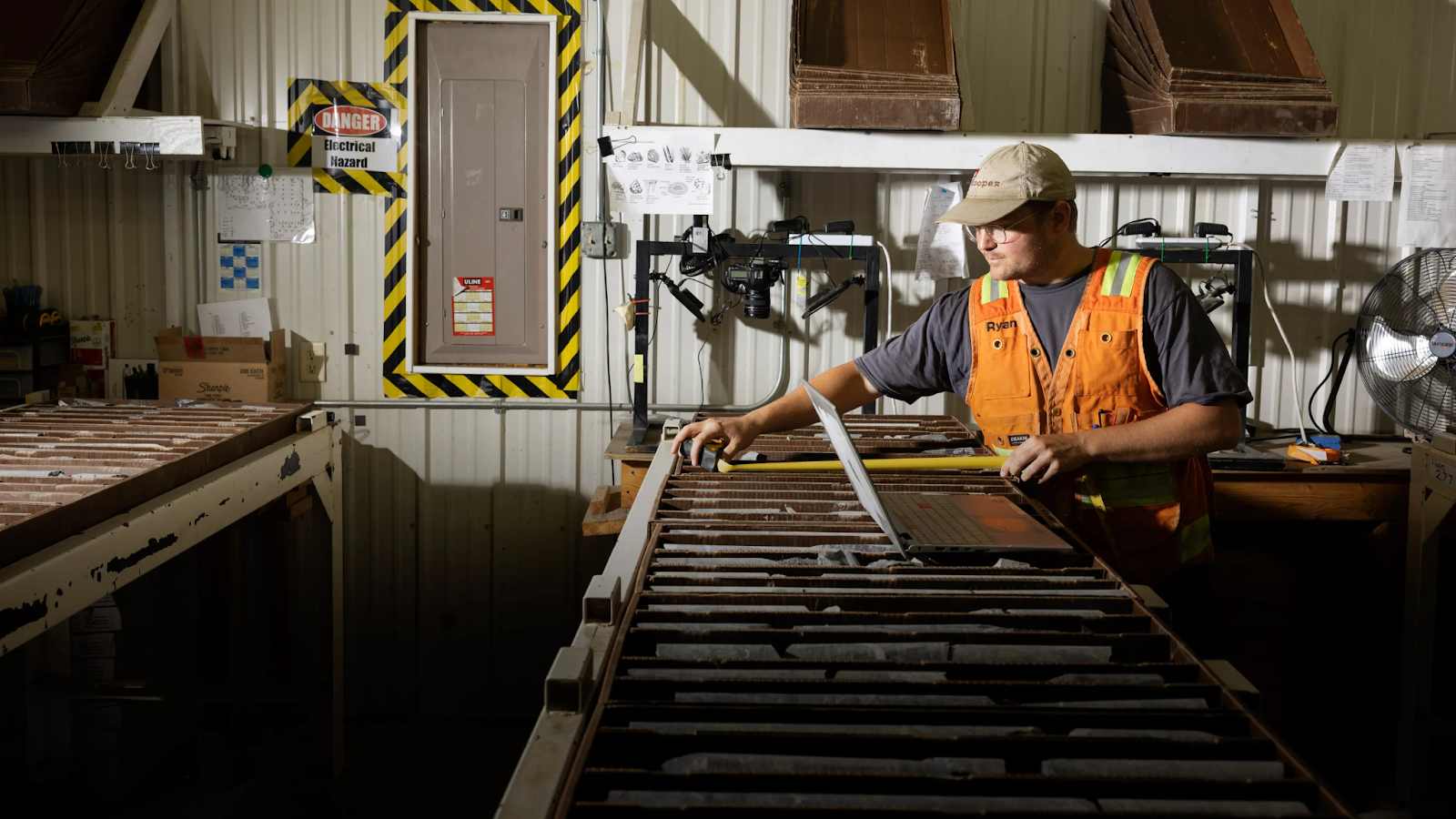
On a farm near Tamarack, Minnesota, Talon Metals has uncovered one of America’s densest nickel deposits. Now it wants to begin tunneling deep into the rock to extract hundreds of thousands of metric tons of mineral-rich ore a year.
If regulators approve the mine, it could mark the starting point in what this mining exploration company claims would become the country’s first complete domestic nickel supply chain, running from the bedrock beneath the Minnesota earth to the batteries in electric vehicles across the nation.
Their experience forms a fascinating microcosm of how the Inflation Reduction Act’s rich subsidies are starting to filter down through the US economy. Read the full story.
—James Temple
We can still have nice things
A place for comfort, fun and distraction to brighten up your day. (Got any ideas? Drop me a line or tweet ’em at me.)
+ Over in London, the Science Museum’s weird and wonderful collection of random household gadgets is entering its final weeks.
+ Devastating news: the TikTok of the man in a bus in a hammock isn’t real.
+ Put the laptop away! European cafes have had enough of them.
+ If you’re planning a cruise this summer, here’s some handy tips on minimizing your chances of getting seasick.
This story originally appeared in The Algorithm, our weekly newsletter on AI. To get stories like this in your inbox first, sign up here.
I’m excited to spend this week in Cambridge, Massachusetts. I’m visiting the mothership for MIT Technology Review’s annual flagship AI conference, EmTech Digital, on May 22-23.
Between the world leaders gathering in Seoul for the second AI Safety Summit this week and Google and OpenAI’s launches of their supercharged new models, Astra and GPT-4o, the timing could not be better. AI feels hotter than ever.
This year’s EmTech will be all about how we can harness the power of generative AI while mitigating its risks,and how the technology will affect the workforce, competitiveness, and democracy. We will also get a sneak peek into the AI labs of Google, OpenAI, Adobe, AWS, and others.
This year’s top speakers include Nick Clegg, the president of global affairs at Meta, who will talk about what the platform intends to do to curb misinformation. In 2024, over 40 national elections will happen around the world, making it one of the most consequential political years in history. At the same time, generative AI has enabled an entirely new age of misinformation. And it’s all coalescing, with major shake-ups at social media companies and information platforms. MIT Technology Review’s executive editor Amy Nordrum will press Clegg on stage about what this all means for democracy.
Here are some other sessions I am excited about.
A Peek Inside Google’s plans
Jay Yagnik, a vice president and engineering fellow at Google, will share what the history of AI can teach us about where the technology is going next and discuss Google’s vision for how to harness generative AI.
From the Labs of OpenAI
Srinivas Narayanan, the vice president of applied AI at OpenAI, will share what the company has been building recently and what is coming next. In another session, Connor Holmes, who led work on video-generation AI Sora, will talk about how video-generation models could work as world simulators, and what this means for future AI models.
The Often-Overlooked Privacy Problems in AI
Language models are prone to leaking private data. In this session Patricia Thaine, cofounder and CEO of Private AI, will explore methods that keep secrets secret and help organizations maintain compliance with privacy regulations.
A Word Is Worth a Thousand Pictures
Cynthia Lu, senior director and head of applied research at Adobe, will walk us through the AI technology that Adobe is building and the ethical and legal implications of generated imagery. I’ve written about Adobe’s efforts to build generative AI in a non-exploitative way and how they’re paying off, so I’ll be interested to hear more about that.
AI in the ER
Advances in medical image analysis are now enabling doctors to interpret radiology reports and automate incident documentation. This session by Polina Golland, the associate director of the MIT Computer Science and AI Laboratory, will explore both the challenges of working with sensitive personal data and the benefits of AI-assisted health care for patients.
Future Compute
On Tuesday, May 21, we are also hosting Future Compute, a day looking at how businesses and technical leaders navigate adopting AI. We have tech leaders from Salesforce, Stack Overflow, Amazon, and more, discussing how they are managing the AI transformation, and what pitfalls to avoid.
I’d love to see you there, so if you can make it, sign up and come along! Readers of The Algorithm get 30% off tickets with the code ALGORITHMD24.
Now read the rest of The Algorithm
Deeper Learning
To kick off this busy week in AI, heavyweights such as Turing Prize winners Geoffrey Hinton and Yoshua Bengio, and a slew of other prominent academics and writers, have just written an op-ed published in Science calling for more investment in AI safety research. The op-ed, timed to coincide with the Seoul AI Safety Summit, represents the group’s wish list for leaders meeting to discuss AI. Many of the researchers behind the text have been heavily involved in consulting with governments and international organizations on the best approach to building safer AI systems.
They argue that tech companies and public funders should invest at least a third of their AI R&D budgets into AI safety, and that governments should mandate stricter AI safety standards and assessments rather than relying on voluntary measures. The piece calls for them to establish fast-acting AI oversight bodies and provide them with funding comparable to the budgets of safety agencies in other sectors. It also says governments should require AI companies to prove that their systems cannot cause harm.
But it’s hard to see this op-ed shifting things much. Tech companies have little incentive to spend money on measures that might slow down innovation and, crucially, product launches. Over the past few years, we’ve seen teams working on responsible AI take the hit during mass layoffs. Governments have shown more willingness to regulate AI in the last year or so, with the EU passing its first piece of comprehensive AI legislation, but this op-ed calls for them to go much further and faster.
Despite that, focusing on the hypothetical existential risks posed by AI remains controversial among researchers, with some experts arguing that it distracts from the very real problems AI is causing today. As my colleague Will Douglas Heaven wrote last June when the AI safety debate was at a fever pitch: “The Overton window has shifted. What were once extreme views are now mainstream talking points, grabbing not only headlines but the attention of world leaders.”
Even Deeper Learning
GPT-4o’s Chinese token-training data is polluted by spam and porn websites
Last Monday OpenAI released GPT-4o, an AI model that you can communicate with in real time via live voice conversation, video streams from your phone, and text. But just days later, Chinese speakers started to notice that something seemed off about it: the tokens it uses to parse text were full of phrases related to spam and porn.
Oops, AI did it again: Humans read in words, but LLMs analyze tokens—distinct units in a sentence. When it comes to the Chinese language, the new tokenizer used by GPT-4o has introduced a disproportionate number of meaningless phrases. In one example, the longest token in GPT-4o’s public token library literally means “_free Japanese porn video to watch.” Experts say that’s likely due to insufficient data cleaning and filtering before the tokenizer was trained. (MIT Technology Review)
Bits and Bytes
What’s next in chips
Thanks to the boom in artificial intelligence, the world of chips is on the cusp of a huge tidal shift. We outline four trends to look for in the year ahead that will define what the chips of the future will look like, who will make them, and which new technologies they’ll unlock. (MIT Technology Review)
OpenAI and Google are launching supercharged AI assistants. Here’s how you can try them out.
OpenAI unveiled its GPT-4o assistant last Monday, and Google unveiled its own work building supercharged AI assistants just a day later. My colleague James O’Donnell walks you through what you should know about how to access these new tools, what you might use them for, and how much it will cost.
OpenAI has lost its cofounder and dissolved the team focused on long-term AI risks
Last week OpenAI cofounder Ilya Sutskever and Jan Leike, the co-lead of the startup’s superalignment team, announced they were leaving the company. The superalignment team was set up less than a year ago to develop ways to control superintelligent AI systems. Leike said he was leaving because OpenAI’s “safety culture and processes have taken a backseat to shiny products.” In Silicon Valley, money always wins. (CNBC)
Meta’s plan to win the AI race: give its tech away for free
Mark Zuckerberg’s bet is that making powerful AI technology free will drive down competitors’ prices, making Meta’s tech more widespread while others build products on top of it—ultimately giving him more control over the future of AI. (The Wall Street Journal)
Sony Music Group has warned companies against using its content to train AI
The record label says it opts out of indiscriminate AI training and has started sending letters to AI companies prohibiting them from mining text or data, scraping the internet, or using Sony’s content without licensing agreements. (Sony)
What do you do when an AI company takes your voice?
Two voice actors are suing Lovo, a startup, claiming it illegally took recordings of their voices to train their AI model. (The New York Times)
X believes that this will help users feel more free to engage with whatever they want.
One of the most requested updates from YouTube creators is here.